What’s in a Name?

What’s in a Name?

Choosing the title for a book is an increasingly difficult task. In a world of marketing and focus groups and branding there is more to think about than just picking something that represents the content.  However innovative and “out there” marketing and promotion folks like to think they are, the fact is, apart from a rare outlier, they tend to drag things towards a lowest common denominator. There is a  narrow range of things that will have a universal appeal, that will call out to everyman, and bid them to buy.

Of course there is some segmentation, Sci Fi has a different lexicon of potential titles to Historical Fiction. But within the genres you see that lowest common denominator emerging (how many sci fi books have Stars in their title was a recent discussion with a book reviewer friend).   Reach back in time and the titles of classic sci fi books were just woeful. Today I don’t think “Do Androids Dream of Electric Sheep” would pass the publishing companies’ doors. The money men would barricade it in. If only they spent as much effort on editing, rather than relying on spellcheckers, but that is a separate rant.

And yet in those halcyon days with names like a mouthful of rocks, the galaxies like grains of sand, sold. In numbers. Big numbers.

So what has changed, what has made us conservative, safe, following the herd on book titles?

It is in parts due to affluence, falling print costs, improved technology and self publishing which have all lead to an explosion in the amount of content. And it is no longer sufficient to aim for a sold out print run, with a few boxes of remainders in the attic. In fact in the age of digital printing the concept of print run is becoming obsolete. Today every writer has half a sleepy eye on the dream of film rights, or a tv mini series. We can’t trust the movie execs to see through DADoES to see Blade Runner.

But there is also the dreaded Return on Investment. The money men are all about de-risking, payback periods and net present values. Making something safe to get a small return is better for them than something bold that may fail. So titles are researched and winners are “proven” chosen based on “evidence”.

Ask what people will buy and they will tell you what they know, it is the trap of the focus group.

If you stick to what people know you narrow your range into the domain of cliches and tropes.

And here’s the rub, fans of a genre know the tropes. They can spot them in a title, and it will be a warning sign of “nothing new here” for the contents.

As a proof by counter example some of the best recent fantasy written has been by Joe Abercrombie, whose book titles are seeming non sequiturs pulled from the middle of famous quotes. And the content was fresh, challenging and hugely engaging.

Lynch’s “Lies of Locke Lamora” – tricky title, was better than his follow up “Red Seas Under Red Skies” which started to become a little predictable.

It’s the internet, two examples are incontrovertible proof. But the paradox is real enough, for the experienced reader, bold content is unlikely to hide behind a bland name (note unlikely, not impossible), and yet for the general reader, a bold title is a challenge they may shy away from. The real question is does the money win, or the art? More thoughts on art and money here.

All of which leads to me to moment of self reflection. I agonised more over the naming of my book than I did over naming my children.

There is a well established precedent that the title of a book of short stories should be taken from one of the stories, or, if they are all based on a theme, setting, or character, they reference that common element. It is not a law, but it is a precedent, which post Magna Carta has the strength of law.

That narrowed my choices to seven, as the stories cross genres, plot lines and no character is reprised.

The objective was to find something representative, memorable, and to which I could associate an image to make an attractive cover.

I discarded “Ali Baba and the Little Thief” straightaway. It was too long, and with the addition of “and Other Stories” the whole thing would become too unwieldy with too many ands.   It was a shame because I’m quite proud of the story.

I won’t take you through them all, but I narrowed down to the following, which I put to my own focus group.

coveroptions

Broadly the guys liked The Lethe Cluster, the girls liked Image. The clincher was that only two of the stories are Sci Fi, but Lethe would only invite a sci fi readership.

Even without a marketing team or sales experts I fell into the same trap as above. Lethe is the centrepiece, but it would be a challenge for a broad readership to pick the book, so I went with the title that has more general appeal, but is bland.

ebook5c

Mistake? You decide.

END

Crazy Man Michael

Image

Crazy Man Michael

You speak with an evil, you speak with a hate

You speak for the devil that haunts me

Richard Thompson / Fairport Convention

There was madness enough for both of us. And blame. History will remember Michael unkindly, but there are more truths in the story of my death and his life than have been recorded or can be believed.

Nor am I, in truth, dead.

Michael, Mikhail, Mikal, time has lengthened and softened his name, just as it has darkened it. When I knew him he was Mica.

He was but a lad, raw boned and rough tongued, heedless when the wildness was upon him, but he was granted much leeway as the Shaman of his tribe. His master died early, Mica came into his power young and untested, and I came to him too late.

The calling of Familiar is complicated. I was conduit to his power, his voice into the vastness and lens into the mysteries, I was his conscience when his morality failed before his power, his counsellor where he had neither the wisdom or experience to judge the proper course.

His body warred with his mind. He was young, barely fifteen when the mantle fell upon him, old enough for a warrior, or a huntsman, but young by two decades to begin the calling of guide and keeper of the lore.

The mystery claimed him when his master slipped from the stepping stones and drowned in winter flood waters. More truths to be told, but not here and now, save to say he had no business to be abroad that midwinter’s night.

In that at least Mica was innocent. As his master drowned Mica fell by the hearth in the Chief’s hall and would have dashed his brains upon the hearthstone had the head woman not cradled him like a babe, and the Chief’s men not held down his limbs.

He was not yet into his growth but with the unchecked power of the mystery he might have thrown off all the bearded muscle that restrained him, had the quick thinking woman not crooned a lullaby and stroked his brow with the tirelessness of a matron. All night he thrashed and foamed, but no more harm came to him than bruises. At least not to his body.

I flew in to see that scene and settled on his chest. I could smell the fear rolling off the men and the resignation settling on the woman.

His body warred with his mind, and lost. The mystery filled and lifted him, I was already too late. In the days that followed it rode upon the waves of all his manhood growth and boyhood confusion. It showed him myriad paths to knowledge like the gaps in standing stones, and like a child he opened every doorway just for the joy of opening. Aye, and spread the skirts of every girl, and while none would begrudge a Shaman’s bastard at their hearth and daughter’s teat the other young men muttered darkly in the corners.

I don’t know if I tamed him, or if the bestiality of the couplings shamed his burgeoning senses. Not two months had passed but he foreswore them all, even those who came, timid or bold but uninvited, to crawl between the furs in his far hut.

To one who could hear the early signs of spring in the shoots stirring to life beneath the last frost, the tribe seemed deaf, blind to the knowledge written in leaf and cloud. He served the Chief summarily, and day by day it was less and less. He disdained all other company. All company but mine. I rode upon his shoulder and he stroked the feathers of my breast and whispered, “if only I could find a lover with your mind.”

Mica’s distance to his fellow men grew so far the Chief came to call upon me while Mica slept. Long years the Chief had ruled, and two Shamans buried in his reign. He knew I could hear him, though I could not answer in a tongue that he in turn could hear.

He pleaded for the life of his tribe, which suffered, wayward without the guide, with no one to interpret the Gods’ will or call the auguries. He thought like a man, and a ruler of men. “Find him a woman who will settle him, ease his unruly passions and bring him back to the tribe.”

And what of me? My charge was the wild boy, failing in his duty, but oh so beautiful in his power. He knew no restraint, we threw wide the doors to darker arts and sweeter sensations. When he drew the magic through me I was alive unlike any of my fellows. My own magic wrapped around me, and through me, and I found I had a power known only rarely in my kind.

It was glorious, but it was no kindness. I had gained the gift of foretelling, though I could only see a little way before the veil of time closed on the future like a jealous lover. I saw Mica on his deathbed, still young and hale but utterly still, if he continued on this path.

The wise words, the man’s words of the Chief struck me then. The mind blight would settle on me when Mica died. The connection that kept me tethered when the vastness opened up before me, pouring magic and knowing into Mica would be lost, and I would be swallowed back into it. The body of the raven would fall lifeless and I would become part of the madness of the Gods and their dreams.

I loved him. There was no malice in him, no desire to hurt, but his mind had outstripped the ability of his body to contain it, and shattered all the ties around him. No others saw the nights he spent doubled up in anguish, too hot, too cold, gasping for air, as his knowledge of things trod over all the things he knew. Yet he tried to hold on to the branch spinning down the stream of his calling. It was courageous, and I loved him for it.

I took a human form, my hair black as my wings, my eyes glowing like coals, a sultry thing as he would not have ever seen. I lead him to a bower I had made deep in the forest, I hid and changed into the Forest Maid and fell with him to the fecund earth of summer. When he was spent I spoke to him with the perspicacity that he craved.

It calmed him. A release he could not find in human discourse, nor claim from me as his Familiar, he found in the Forest Maid. In her guise I bled him of the excess energy of his mind and body, and slowly he brought them into balance. He came more to his people, and when the Chief deferred to him in the matters of fortune and the Gods, Mica answered with clarity and the perspective of one who sees beyond the boundaries of the world. He dressed wounds, he blessed children, and the tribe began to prosper.

Curse the gift that imprisons and chains. For the foretelling was still upon me, and Mica knew somewhat of it. I would settle on his shoulder when he walked back from the bower to the tribal lands and he would ask me of his future and if he might marry the Forest Maid of the bower.

I saw. I saw the first time that he asked me, even as he set the broken limbs of huntsmen and brewed potions for the midwives. I saw myself as the Forest Maid, dead upon the grass.

As Shaman he had power over me, his Familiar. He compelled me as he walked to his daily assignation. So I told him the truth. He would never marry his lover, for she would die by his own hand.

He threw me from his shoulder, and roundly cursed me then. Betrayer, bird of envy, jealous monster, thus he called me. And as I opened up my mouth to caw a nay and say that I was she, to change my form before his eyes, he drew his dagger, steel bright in the sunshine and he slew me.

The sky span as if a mighty whirlwind stood still and turned all of creation. The world tightened ropelike and recoiled. Mica had broken the sacred tie of Shaman and Familiar, and the vastness and the mysteries closed upon him like a snapped bowstring.  He stumbled and swooned even as my raven’s body dropped, and the Forest Maid landed on the mossy ground.

The change was upon me and I had no living form in which to contain it, for both were heart pierced and dead. I could feel the draw of the vastness clawing at my unravelling form, dragging me like an unseen current to drown in its eternal madness. I begged the spirits of the trees and grasses, the flowers and the bushes to take me in. It is not in their nature to refuse their gifts to any.

And Mica? My broken, mad Mica? He woke to find this lover at his feet, her heart’s blood staining the front of her dress. He raised his hands to draw the life back into her, and found his power fled.

He raged, he raised his arms to the heavens and roared until his lungs failed and he coughed gouts of black blood to soak into the sod with mine.

With no open doorways in his mind, and no means to speak to Gods and wisps and wights, the knowledge bled swiftly out of him. From the boles of the trees I saw his eyes clear, from the bobbing seed heads I heard his breath grow steady. Every creature in the forest wide had heard his voice howl in loss and self recrimination. I saw the moment he became a man again.

He died old. Some remnants of my power kept the bower free of winter cold and washed only lightly by the rain. He became keeper of that wild garden, and my long exile went easier while he lived. He tended the trees and the flowers where my spirit had settled, unable to hear my whisper in the grasses, but knowing there was a penance to be paid. He was cursed by all the Gods and men for breaking his most sacred trust, but I think he knew that I forgave him.

END

When I first heard Sandy Denny’s voice singing Crazy Man Michael I assumed it was an old folk tale. I t had all the hallmarks of something passed down by word of mouth through hearth and tavern until someone sought to set it down.

It isn’t a folk tale at all, but a reflection on death and blame and guilt written by Richard Thompson of Fairport Convention in 1969, following the tragic death of his girlfriend Jeannie Franklyn in a road accident.

I’m indebted to Murder Ballad Monday for the background and various story cues.

None of that truth changes the fact that it is a beautiful and haunting story, and since there was no authentic proto story to use as a source I wrote my own. It is largely faithful to the song, but I have expanded into the areas where the lyrics are silent. Why was it natural for Michael to converse with a raven? What power did the raven hold to change shape? and so on.

Who knows, after the world ends and aliens pick through the remains of our civilisation maybe they will find my story first, and then the song.

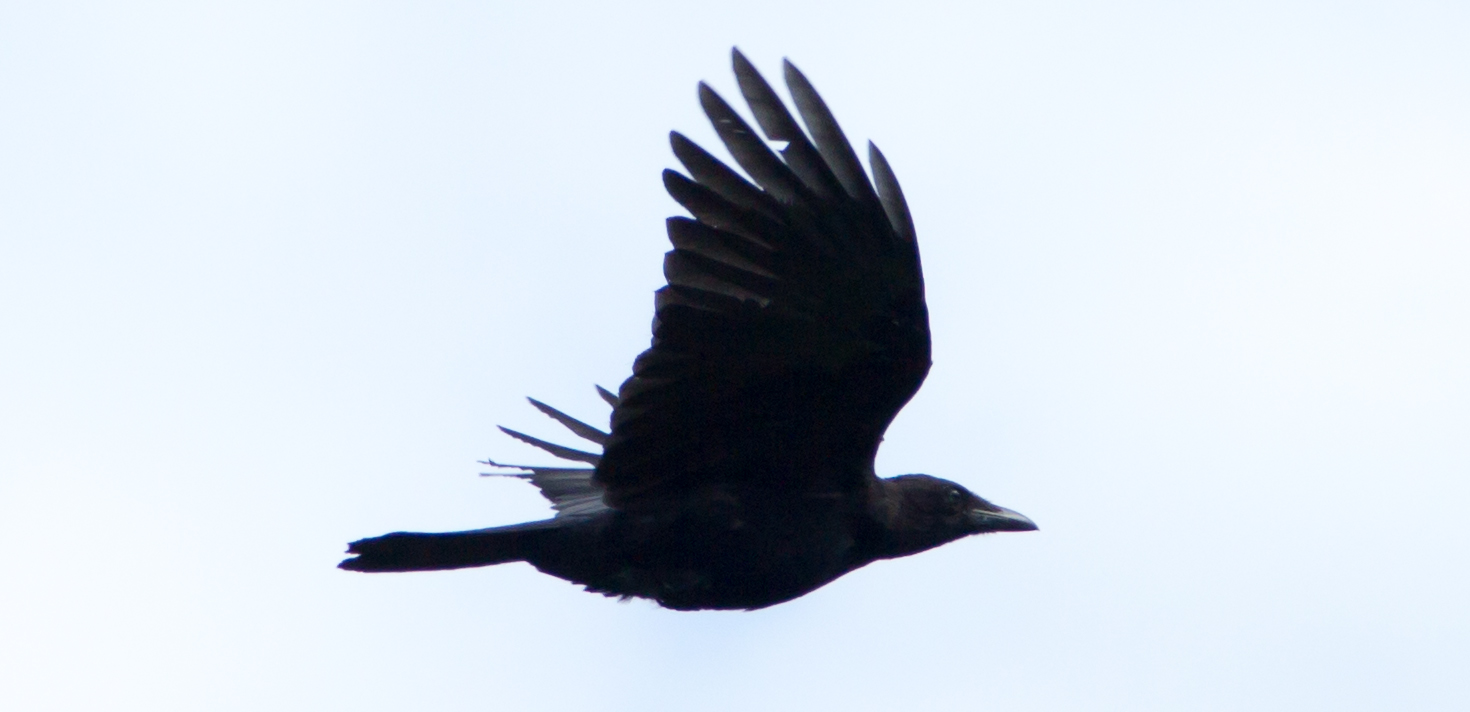
The photo is one I took, and probably isn’t a raven. Bite me.

My book available here and here among others. Buy it, review it, tell me what you think.
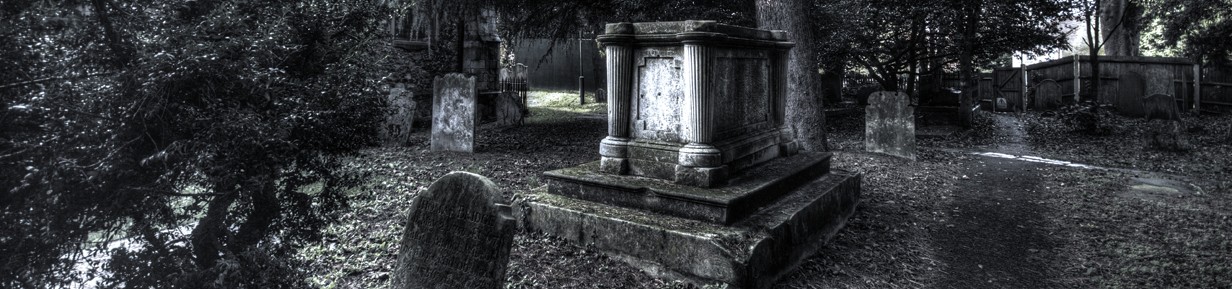
Autumn by Ruswa Fatehpuri

Autumn

At the dizzy end of Fall

Disoriented. Winter coat, summer shoes

Leaves wet in heavy piles, the smell

Your shawls retreived from plastic

Memories preserved in aspic

Quiet streets, the afternoon

Christmas lights and cloudless skies

I finger spines of all the books I will not give

Wind whispers in the branches, who and who?

Did you leave her? Did she leave you?

Ruswa Fatehpuri

from Sold and Bartered

Thematically related Post:

DP – Leaving

And as Autumn rolls around again, so does this poem, reblogged at re-linked…

DP: Never Surrender – Leaving Mina (Hajj Diary Extract)

This is probably the last extract from my Hajj diary before publication (yes it is finally ready)


Leaving Mina


Leaving Mina was an emotional rollercoaster. I went from despair to ecstasy with detour through all the flavours of anger.


Shia and Sunni leaving times are separate. You might think that the fewer overall numbers of Shia would make our exit shortly after midday a seamless and trouble free affair, with the true chaos to follow. How wrong, oh my Lord, how wrong.


Someone had pinched the wheelchair. It is heavy and does not fold up into a particularly compact shape, so I found it eventually outside one of the Iranian tents. The tingle of annoyance began here, let’s call it 1 on the overall scale, although my wife might argue my baseline of irritation is about 5.


A bit of deep breathing and the reassurance of locating Mum quickly helped me regain my Hajji calm. We joined the queue to go up the concrete steps to the exit gate. The stairs were split down the middle by a narrow ramp, theoretically a plausible way of rolling the wheelchair up without trying to carry it, but in practice gravity is as inevitable as the day of judgement and the stairs were very steep. I resorted to carrying it, surrounded by Iranian women, probably from the same tent that had attempted the wheelchair theft. In any event they seemed to have some momentum of antipathy towards me, and no sympathy for the fact that I was trying to lug a large metal object up steep stairs in a crowd. There were inevitably some bumps and scrapes.


A few people helpfully pointed to the ramp as if I was some kind of moron. I tried again, to show goodwill, and more people got hurt. When two objects try to occupy the same space the hard metal one is likely to win over the soft fleshy one. At times like these I think the grey matter at the head end of the soft fleshy things should take charge. Alas it seemed the folks around me were using the very soft fleshy bits at the back and halfway down for decision making.


By the time I got the top of the steps I was probably on a 6, but the relief of getting there eased me back to a 3.


Trust me on the maths, there were about a quarter of a million Shia attempting to leave Mina through one gate a couple of metres wide. In Hajj terms this is a reasonable but not overwhelming crowd. There were also police 4x4s, policemen on foot, and importantly, a huge crowd of Sunnis trying to go the other way and get into Mina before their own official departure time.


I spotted our group flag, pointed it out to mum, who was by now a couple of metres and a dozen bodies away, and steeled myself to forge through the intervening distance. At a guess I had about twenty metres to traverse. Progress was in inches. At every step the wheelchair caught on something. That something was invariably attached to a someone.


Sailors thrown overboard in a storm may feel like this as an unthinking, unreasoning force drags them away from the tantalising sight of safety.


I went sideways, I went backwards, and rarely did I go forwards. The police looked on impassively. At one point they tried to force their 4×4 through the crowd, and then gave up. I lost mum, I got shoved and shouted at, it was insanely hot, and everyone was trying to breathe the same air and sucking in each other’s carbon dioxide. And then the red mist came down.


I was in a hostile crowd with a significant weight of pointy metal. Things could have gone very badly, but some element of the Hajj spirit remained. I wasn’t going to force my way through, but I was not going to be moved. If someone pushed and hurt themselves on the wheelchair, so be it. I planted my feet, set my shoulders and secured my grip on the frame of the folded wheelchair.


My determination must have shown in my expression. My pleading and apologies had had no effect, but looking at my clenched jaw and flinty eyed glare the crowd parted minutely. I edged painstakingly through the crowd to the group flag. They were an eye of calm in the storm of humanity around me, and I was welcomed in with arms draped around my shoulders. There was no relief; there was no sign of mum.


I asked them to look after the wheelchair while I dived back into the writhing mass of bodies and those same welcoming arms held me back. I was on the verge of panic. I looked to the heavens and vowed a day’s fast if mum made it through the crowd safely.


An agonising minute passed, I scanned the crowd desperately, trying to see over the heads for her diminutive form. A second minute passed, bodies surged away from us and deeper into Mina. She would be carried back by the incoming Sunni tide as far as the Jamaraat before the crowd thinned, and that would be the best that I could hope for.


Raza’s wife emerged from the inexorable press of bodies. As the men at the outer edge of our group parted to let her through to safety, she said: “Ali bhai, I’ve found Auntie, she’s with me.”


END
More about my Hajj experiences and about my Hajj book here

My book of short stories is available here and here among others. Buy it, review it, tell me what you think.

On the Road. After All

On the Road. After All

Have you ever wondered why no long distance hauliers are renowned epic poets? As someone who has spent a lot of time in the saddle I’ve puzzled over it for years. You would be wrong to leap to bourgeois conclusions of class and erudition, that is lazy thinking.

If you have never driven long distance, and I specifically mean as the driver rather than a passenger, you may wonder at my premise. But those who have sunk over hours into the drivers seat, feet nursing the pedals, hands caressing the wheel will know. With part of the brain occupied and preoccupied with speed and traffic, distances and lanes, hazard perception and directions the rest of it is freed. The higher mind is alone at last, its noisey sibling distracted and silenced, the demands of doing and achievement delegated.

The road has rhythms, be it at an over the limit blatt or a congested crawl, although in truth it is empty miles and darkness that are the most conducive environment. The rhythms give a pace and order to thoughts, but even at constant velocity there are variations and dissonances. You pass, or are passed, there are imperfections in the tarmac, changing lanes, on ramps, off ramps, lights all weave in and out of the beating heart of the engine. And that too has its complexity, whether a four, six, eight or more part percussion of pistons, conducted by the throttle and played by great lung fulls of air to the intake manifold.

It is in the regular irregularity, the tapestry of complexity, that epic poetry lives. My faithful motor and I have shared almost a hundred thousand miles, over the years and with other partners you could double that. In those vacant hours I swear I have bettered Queen Mab and Coleridge, shaded Shelley and The Mariner. But it was a fleeting brilliance. It faded as the engine ticked and cooled and by the time pen and paper were assembled to bear witness to genius it had fled leaving only the glass slipper of mocking remembrance.

Of course, that is not all of it, that is not it at all. Today I am hands free, voice recognised, recorded. So why haven’t the tattoed hoards erupted into todays whateverthefuckosphere howling and yawping, claiming their place beside Whitman, bouncing Ginsberg off the bonnet?

Surely there is more to be had from trucking poetry than CW McCall?

The road lends itself to introspection, which is rarely a happy indulgence. There is time to rake the coals of fires long extinguished, or pursue flights of fancy like lost inland gulls. Gloomy thoughts and dark roads are a poisonous blend, Sobranie Blacks, seductively sickly sweet and yet filling the body with toxins. All the better. Happy poems are for hacks and Hallmark.

The blurring barriers become extremely dense, urging you to drift inwards with a new and more potent gravity. The shadows under the roadside verdancy promise eternal youth, androgyne elves and faerie queens. Dwell too long and the camber may sway you left or right and off the narrow path of safety. Survive the temptation and the passing juggernauts seek to suck you beneath their wheels.

Permit me a brief change of tack, I’m driving and my mental sat nav abhors straight lines. It is ironic that it is now, in the depths of night and on the dark of the road that I am making the choice to live. And appropriate perhaps that earlier this evening I have met briefly with the friend that introduced me to Dar Williams, and After All is playing on the stereo.

“When I chose to live, there was no joy it’s just a line I crossed, I wasn’t worth the pain my death would cost.”

I’ve had the end planned out in intricate detail for some time. No farewell note, that would be crass, just final touches of care and consideration. Paperwork neatly filed, bank accounts left in an orderly state allowing for the delays of probate, cash in the house for out of pocket expenses. The method would be calm, private, quiet. An undisturbed moment to prevent any hitches. And if I have not wholly made my peace with God, at least we have come to an understanding.

I’ve quashed it all in these melancholy miles. There is no way to tie up all the loose ends. I’ve picked apart my scheme meticulously, forensically, and found the unfixable flaws. What’s worth doing is worth doing well, and if I cannot do it well I will not do it.

That detour brings me back to hauliers and poets. In the end it is just a question of attention and concentration, and perhaps natural selection. It is about what the eye sees, what the heart feels, and what action the mind takes. And it is in this moment of darkness and choosing life that I learn the reason why no long distance hauliers are renowned epic poets.

Have you ever seen an articulated lorry jackknife? From behind and approaching at speed it seems implausible for something of such enormous weight to swing laterally. It draws the mind that is seeking the turning, pivotal moments in a grand rhythm. It calls “here is the foot on which you spin your great reveal”. It is that explosive writing rush when the finale becomes extraordinarily clear. Ink spills from the pen like gasoline from a ruptured tanker, the instant in which you know you have at last bested Queen Mab and Coleridge and the page catches fire.

Life did not choose me after all.

END

My book available here and here among others. Buy it, review it, tell me what you think.

Tradesmen’s Crossing

Tradesmen’s Crossing

If you are but an eye aligning scales, and I a weight like coin, then who in truth is God? Should I be awed to know you so capable at trade? A deal done for eternity, and salvation so cheaply purchased.

The sun has burned my shoulders. Photon flail. I found you where the salt of dripping blood and sweat crept beneath the peeling skin.  My wounds. I welcomed them, easy as standing still, unflinching. You offered something other than the grave, and I gave. But the moment of clarity came when my raw flesh cried. A bargain of burn for burn.

Salt proves you capable of humour; a poison to complete each meal.

Your codicil of curses, taunts and ridicule has left me clothed in garbage, waste and humility. I will leave a trail of stench throughout your garden, beneath the laden boughs and grassy banks, but tears and tresses have washed my broken feet. You need not fear, I will not flinch when laughter chimes in harmonies from hanging harps, nor cry when tremens tips my cups across the sward. I do not begrudge the statements of fidelity, the false trails of timidity, the kiss. I forgive them and I forgive you, and the kiss.

This is the moment of transference, for what is done cannot be undone. Long before you raised me up, excruciate, the pit was dug, and light was just a faint reminder of the sun. But as the sweat of toil, the blood of blisters beaded and intertwined my shovel stopped. How was I to know the imperative of bracing walls? they trembled with the threat of falling in. At last you let me learn the art of climbing, fall by aching fall, until back braced on filth I reached upwards and out. Why did you not warn me that the light burns hot as fire?

Is salvation mercy or just a means of keeping busy?

You salved the cuts and placed the pitiless crown upon my head. Fatted calves poured their throat libations: alizarin, carmethene. I was succoured and symbol. Then you hoisted me aloft, hands nailed to heartswood. Everything comes down to price, and I was always too proud to haggle.

You are no God, and I am not your son. You are a merchant, and we have made a trade. Burning, wounds and salt on one side of the scales. I will foul the sweet air of your sanctuary, but tread lightly on the turf.

END

My book available here and here among others. Buy it, review it, tell me what you think.