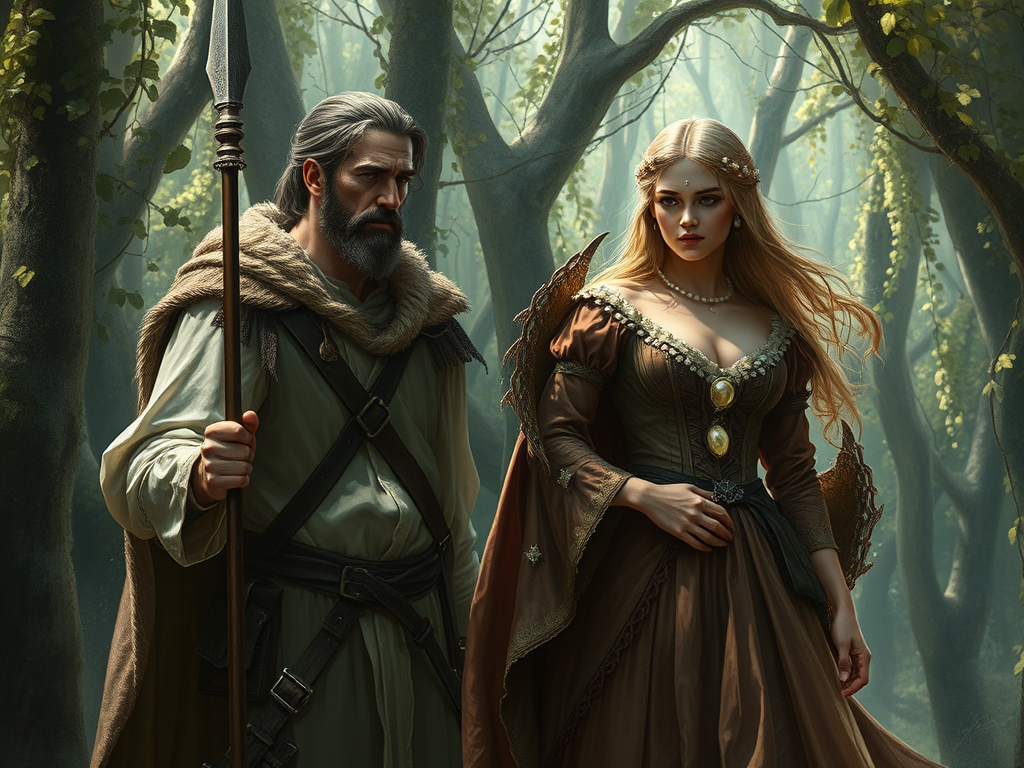
AI generated image of Jan the Huntsman and Lady Tamara from The Bloody Briar
My story The Bloody Briar is now available at Swords and Sorcery magazine. It is another folktale mash-up, this time wholly European. Head over there and take a look.
Everyone will be familiar with some version of “The Briar Rose” (Sleeping Beauty), which I have intertwined with “Tam Lyn,” an originally Scottish story with variants retold throughout Europe.
For those not familiar with Tam Lyn, there is a thorough background on Wikipedia, or you can listen to a modern version of it, as performed by the late great Benjamin Zephaniah, accompanied by Eliza Carthy and the Imagined Village. It is well worth eight minutes of your time. The key themes are transformation and redemption, which I have blended with a reimagining of the backstory to Sleeping Beauty.
Mt previous folktale mash-up was based on two Sumatran stories. You can find The Hornbill and The Lame Horse in Fairy Tales Punk’d Vol 2
For more about my writing check out my Bibliography.
END
The image accompanying this post was created using the WordPress AI image generator. This one took three prompts.
The origins of this story are a patchwork quilt. I have borrowed liberally from those around me in my university days, both my own alma mater of St Johns, and Homerton, home to many dear friends.
At its heart are my memories of Armand & Evi, both post grads. Their relative maturity and beautiful romance gave them a palpable aura, a sense that we were in the presence of something greater. He (A) was Turkish. She (E) was Greek Cypriot. A forbidden love that outstripped your Montagues and Capulets.
I recast them into a Pakistani origin Muslim boy (Samir) and a Northern Irish Catholic girl (Sorcha). Proximity makes the latter a little more accessible to me than Greece/Turkey. The former is home territory.
I modelled Sorcha’s look, if not her life, on a friend of a friend, someone whose social circle intersected with mine. She was exquisite in a way that leaves an impression that lasts thirty years. Sorcha’s mannerisms are more recent, drawn from listening closely to a colleague (I told her why).
Samir’s look I modelled on a chap I met on my first day at university. He left me an introductory note headed by a beautifully scripted greeting in Arabic. He was a medic so I barely saw him again over the next three years. For the story he wears my leather jacket.
Evi died of breast cancer the year after I graduated. If you have read my story “The Book of Condolence”, the opening and closing moments, with the narrator deciding what to write in the titular book, are purely autobiographical from Evi’s memorial service. The rest of course isn’t.
Threads from those lives and the geography of Cambridge are drawn together to make “Acts of Rebellion”. I should note here that during the 90s Homerton was a teacher training college, I understand it has evolved significantly since then.
I’m deeply grateful to Suspect for publishing it, and to Faith and Sharmini in particular for their sensitive and thoughtful editing.
I used the WordPress AI image generator for this post. It took two prompts to get it right.
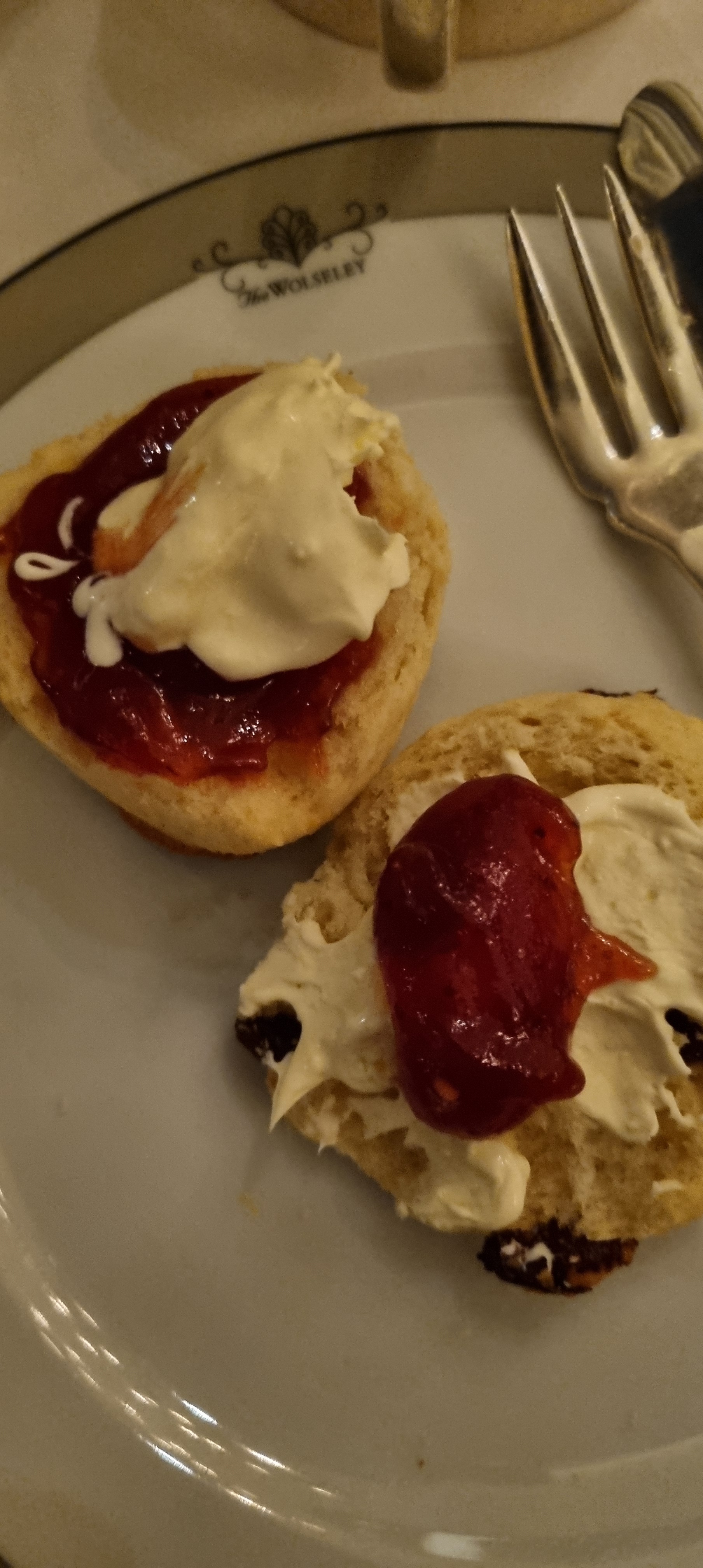
How do you take your scones? It is a debate very much reflective of our times. Polemic vituperation rather than objective analysis. Cream first with a dollop of jam, or a jam smear with a pile of cream?
It’s not just a matter of taste. I’m here to tell you there is a right answer; based on rigorous experimentation, science and considerable weight gain.
My first extended exposure to scones was at college. The groundsman’s wife used to prepare tea for our home cricket matches. Not just the brew, you understand. For those not of this green and pleasant land or blessed with cricket, the innings break in a cricket match can also be “tea” and in that moment the piles of scones accompanied by pots of jam and cream come under the umbrella of “tea” as a repast.
High-performance sport this was not.
As a bowler, the key to enjoying every game was to win the toss, field first and then snooze off the mid-game excess to the distant snap of leather on willow. Heady days.
Then there was my neighbour, Amanda, who kept a rumbunctious band of boys fuelled with bready things, mainly malt loaf and scones, all drenched in butter. As a Southerner, I suspect it is from her that I picked up the habit of saying scone (to rhyme with gone), not scone to rhyme with bone. I have no quarrel with either, or either if you prefer.
More recently I have invested time and no small amount of money in some of the finest eateries in the land to thoroughly test how a scone should be consumed.
Cheese scones are not really my thing but I do like a sultana and I’m willing to see the human species progress with trials of other combinations. I’m not here to judge, only to inform.
Taste-wise, unless you are an acrobat, it is the scone itself that will hit your tongue first. The mess created, jam moustache or nostrils full of cream, is about evens. If you are in Claridges use a napkin not your sleeve. A small win here for cream on top because as the scone tumbles and crumbles in the mouth, my preference is to get the cool creaminess first and the sugary strawberry hit second, but it is a matter of fine margins and not the determining factor.
The key point is in fact at the moment of construction. Your scone should be halved; the top separated from the bottom. If you have channelled Solomon and have split it lengthways I applaud your endeavour but you have made life hard for yourself for little gain.
The essential thing you must establish now is the relative density of your jam and cream. The more dense item must go first. So if you have a luscious conserve or extra jam, wobbling on the tea spoon, accompanied by a light, whippy cream, it has to be jam first. Otherwise the jam will slide the cream around and you will only make an exhibition of yourself. Given the number of people taking selfies and lifestyle shots in tea rooms these days you’ll end up a gif, and not in a good way.
On the other hand, if you have a pot of golden joy, cream so thick it it takes an effort to dig the spoon in and makes a small sucking pop as it comes out, with an airy strawberry confection to go on top, it has to be cream first. Otherwise you’ll be wearing the jam (and you really should have dressed up for the occasion).
And if, Lord love us, you are in some corner of paradise where the cream would sink to the bottom of the ocean and the jam would tempt a serpent away from the apple tree then be kind to yourself and order more scones.
That’s it, heavy first, light second, slather and enjoy.
My tests were conducted at the following establishments, none of which sponsored me but I would be delighted to be asked to come back…
Betty’s in York, Claridges, The Theatre Royal, Cafe Wolseley and Raffles, naturally.
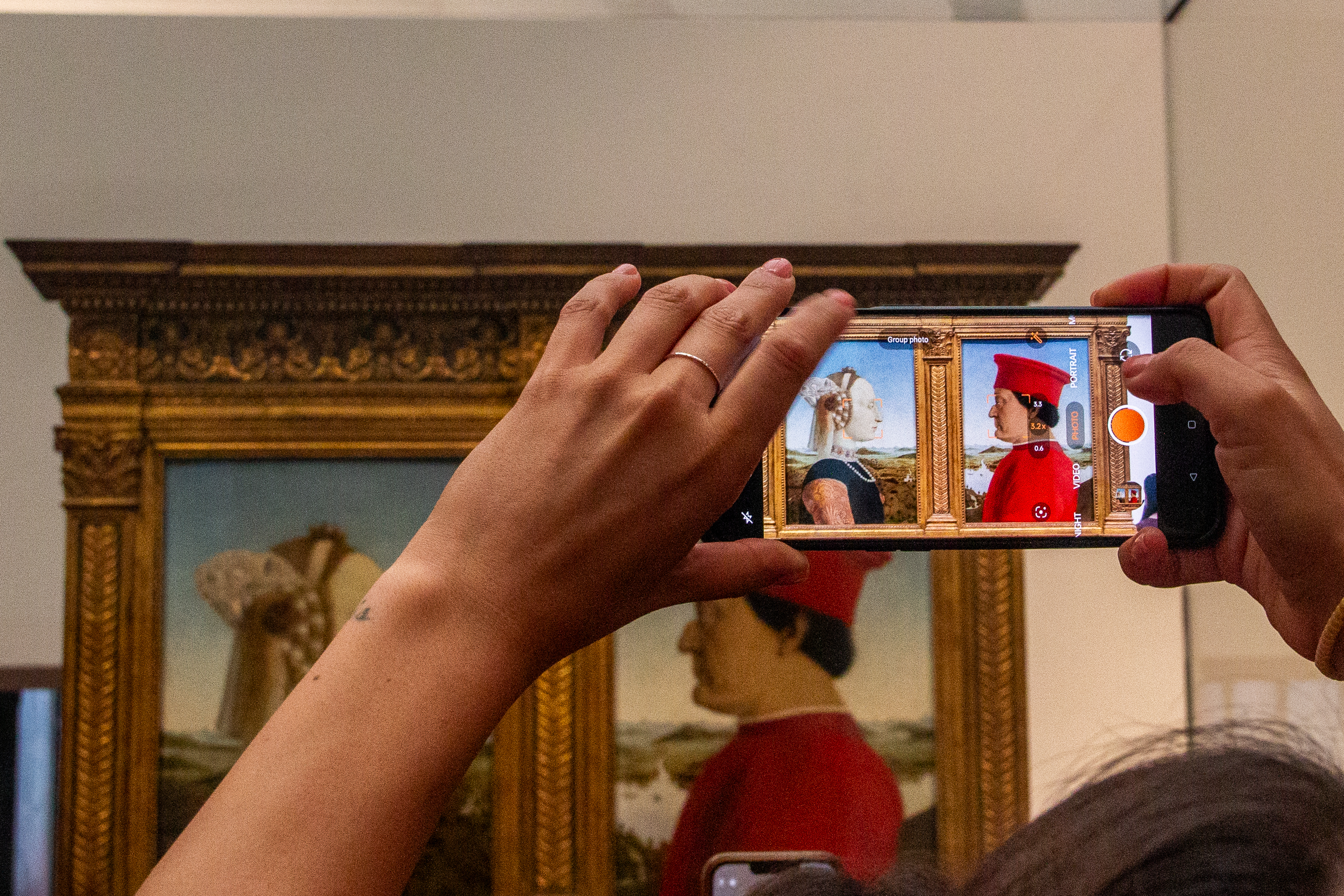
Picture of the portrait of the Duke and Duchess of Urbino by Piero della Francesca, Uffizi Gallery, Florence. Source: me.
Down with all kings but King Ludd*
I have come to bury human creativity not to praise it.
My thoughts today are not with those employed in creative industries, but that army of creative people toiling away at what they love to do in the solitude of their own homes. I might get to the former another day.
Gen AI has launched a grenade into artistic circles and the lamentations have begun; an outpouring of opprobrium on the inauthenticity of the outputs. It makes nothing new, the critics cry, it can only plagiarise what has gone before. The end of the world is nigh.
And then we all laugh because the machines don’t understand hands, or how many legs someone should have.
Everything we do is derived from something else
All true. But imitation is also true of the majority of human artistic endeavour. Once in a generation we might get a genius, a Mozart or a Miami Sound Machine, that pushes art to a new level. If we get more than one it elevates the moment in history into a golden age. Everything else is derived, a pastiche, an homage when we admit we are doing it.
Most of what we produce is distinguished only by going to the effort of producing it. I count myself among the writers. The subtle difference between me and a non-writer is that I have extruded the wires of imagination and exploration into a basket of words on a page. I can’t claim to have advanced the human condition any more than infinitesimally, and certainly no more than any other writer had you chanced upon their work instead of mine.
Of course, I think I have the great [pick an identity] novel within me. I am spurred on by the belief that one day the stars will align and I will find that ecstatic link between brain and fingers, the perfect synchronicity of lungs and viscera that will deliver a draft of it onto the page.
Whether that moment arrives in my allotted span, who knows?
In the meantime, like every other artist out there, I weave together the sum total of my experiences, what I have read, what I have heard, my preferences, the what-ifs I am willing to ask myself and graft. Have I ever broken free of the seven basic plotlines? I doubt it. So too the painters following a style or school, the musicians starting out with the standards of their favourite bands before re-ordering the limited range of chords the human ear can hear. Ed Sheeran proved that in court. Don’t get me started on the internet poets and their tortured prose with added line breaks, there are no new thoughts there (they tell you in their bio they are a poet because how else would you know).
Let’s not call it copying, that sounds bad, instead let’s call it honouring what has gone before with imitation. You know the quote:
Imitation is the sincerest form of flattery that mediocrity can pay to greatness (Oscar Wilde)
Sound and fury, signifying nothing
What happens to all that output? Mostly nothing. Speaking for the writers, the acceptance rates of most publishers are one in a hundred. Much of that is free, or paid a small honorarium, in tiny journals that sustain themselves with a few thousand readers and then die. God bless those beautiful souls who launch them. The stories will lapse into obscurity and the best we can hope for is that they will be discovered by grandchildren in a dusty attic one day.
AI will improve. Like any dedicated art student, it will learn to do hands. All the time my fellows and I stare at a blank page, nursing that combination of expectation and despair, some scoundrel will have thrown half a dozen prompts into a tool and generated a pile of perfectly readable fare. As slush readers and editors drown under the weight of these unearned stories, these manufactured works, the competition for the precious few paying berths will intensify, and that most valuable resource for all of us – the audience -will be presented with an array of what appear to be substitutes.
So what?
If the audience are served, does it matter how?
Perhaps not. You pays your money and you takes your choice. This is the irrefutable logic of the market. Caveat emptor and all that.
Except most of the writers I know are not in it for the money. Apart from a tiny fraction at the top of the bestseller lists there just isn’t enough in it. We all have jobs or have retired from a lifetime of wage slavery. It’s this fact that unlocks the reason why this all matters.
Price or value?
AI may bring economic efficiency to the production of creative stuff. Hours sweating over what would be humdrum anyway replaced by a few keystrokes and all that human time available to drive an Uber instead. Progress.
But this is not a game of quantity and cost. However much I might aspire to be Ondaatje, somewhere in what I write is a sliver of me, my experience, my reaction to the world. We make art for the chance, however slim, to affect someone else with what has affected us. Whether that is a smile, a tear or just minutes of pleasurable distraction from everything else in their world while they visit ours.
Making art is a narcotic. There is a joyful exhaustion that comes with laying down a first draft. The knowledge that the bones of what will become a story are present, there is something to hone and craft. Closing the file on something ready to share with the world is a sense of fulfilment. Getting an acceptance after a dozen rejections is a pure high – another human being has seen something of value in what we have made. A review or just some positive feedback is a shot of adrenalin.
Very rarely does it pay the bills.
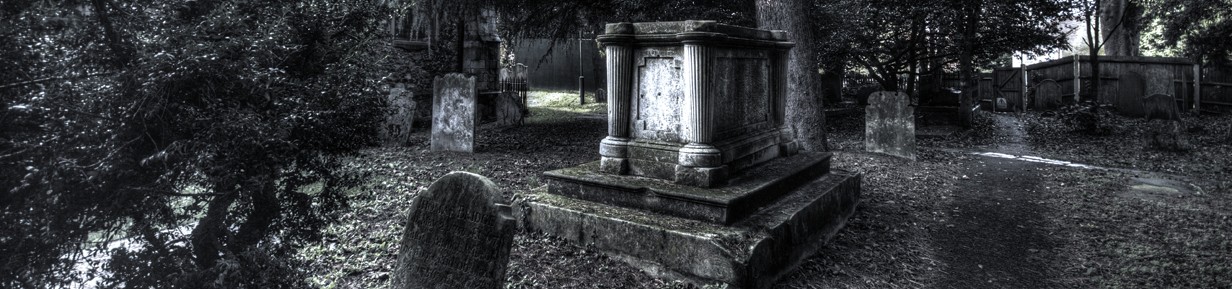
Death of Chatterton by Henry Wallis
We are nothing if not connected
We make things and share them with others because it is how we connect with the rest of the species. It is bound up in our DNA. Around those early campfires of our ancestors were the storytellers, spinning the tales of our shared humanity, the things we value, the limits we accept. Accompanied by a hide drum. Recorded with lines drawn on a cave wall.
In time the reader may not be able to tell if the words they read, the painting they view, the music they listen to are made by hand or machine. Individually they may not care, but collectively they should. One is the product of genuine human experience, atomistic, populated with diverging perspectives, outliers and outsiders. The other is an agglomeration of shadows, a vast exercise of averaging in which the individual is lost. Without people at the heart of creation the world will be a greyer, desaturated place. Like the transition from analog to digital, AI generated art will sacrifice depth and richness on the altar of efficiency. We will lose another part of what binds us.
Economists call this sort of intangible benefit, this thing that sits above the commerce of product and price, an externality. Markets are notoriously bad at dealing with them. It takes societies, and the governments that represent them to put a marker down and say: this matters too.
And what if, in an age of oversupply of things poured out of the GPTs, the next toddler Mozart does not run their sticky fingers over a keyboard, or sketches of the next Raphael, with all too few years among us, are buried under prompt generated fabrications?
AI will improve, I have no doubt. It may well outstrip the massed ranks of scribblers, daubers and buskers on some measures of quality. But it does not itself live, feel and express. In the end, its product is just that – a product. It is not real. Without the artist, without the toil, without the desire we risk being left flailing around in a world of ersatz emotions and synthetic understanding.
Untamed, AI will leave us diminished.
Where there is life there is hope
And yet…
I’m old enough to remember the advent of sampling. Tank Fly Boss Walk Jam Nitty Gritty and all that. Somehow people still find meaning in music even if it is recorded and clipped and replayed with other bits, even if no horsehair bow is drawn across a real string and instead a note, compete with minor distortions and aberrations is played with a keystroke.
We’ve lived through disruptions in how we connect and we continue to do so. AI is here to stay, maybe we just need to learn how to communicate with each other through it.
End
*Song for the Luddites, Lord Byron
I’ve not credited the Shakespeare quotes and borrowings, if you’re here you’ll recognise them.
As ever, all opinions are strictly my own and do not represent those of employers past or present.
Sometime in 2014 I had my first experience with an anechoic chamber. This is a room with surfaces that are designed to stop the reflection of sound and electromagnetic waves. What you feel when you walk in is a deadness, no timbre or resonance when you talk. I didn’t stay long and my hosts did not close the door. Apparently, it is disturbing to be in there too long.
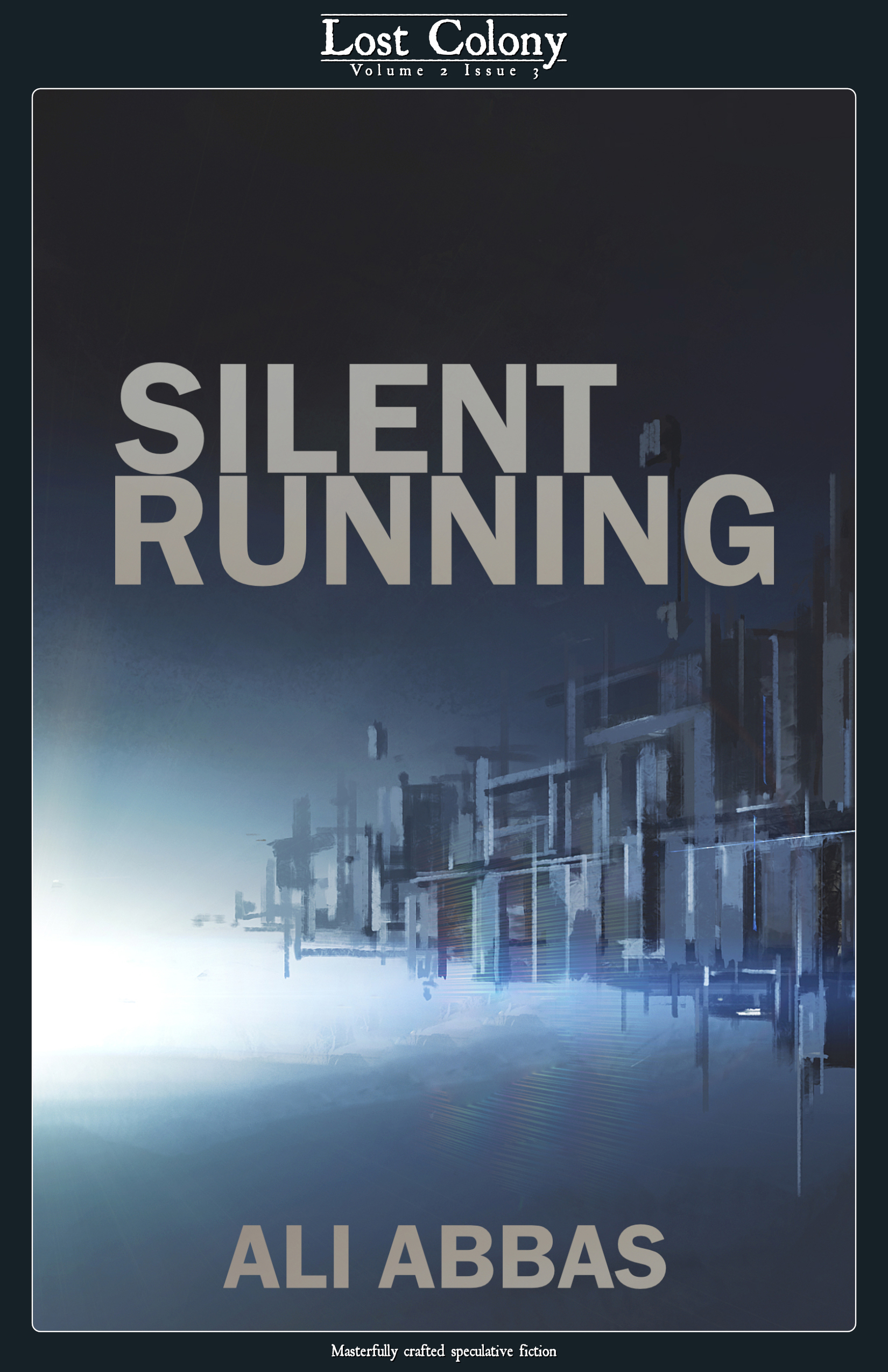
That got me thinking: what if you had the opposite? What if there was a room in which you heard everything; every sound, every signal. And if you could then eliminate the things you know about and understand, the noise that fills our senses, what would you be left with? In that moment was born the Echo Chamber, the piece of tech that sits at the heart of Silent Running.
Hear everything, silence what you control, listen to the secrets of creation.
The Setting
I had the universe of the Lethe Cluster already formed. It appeared in story form with that title in a competition entry to the annual NYCMM short story competition for 2012 and go me through the first round of the competition with confidence-boosting feedback. You can read that story in “Image and Other Stories“. I’ve also noodled around that universe on this blog, under the broad heading of Cluster Wars.
The potential of tech that hears everything, and a region of space that defies intrusion combined to give me Silent Running. The characters and the broad arc of the story came together relatively quickly after that. Early versions of the eventual novella were rejected and hindsight says rightly so. I took it through my beloved beta readers and the text came back covered in suggestions and corrections. I cannot thank them enough. Hours of their precious time were spent sharpening my prose, tightening the story and holding up a mirror to where I had been lazy or just plain wrong.
The Process
That process, painful as it was, got me most of the way to this version. It still needed tinkering and getting to the point where I was happy with it, but there was something that still felt incomplete. It took dinner with one of my writing group to set the seal on this story. He was visiting the UK and we managed to find a few hours one evening to devote to good food and an absurd range of topics. Corporate governance, religion, astrophysics, quantum physics, and more. It gave me a combination of context and confidence. There was a way to bring the science in the story together with what I was developing in the broader Lethe Cluster universe, the way I wanted space travel to work and how this linked to faith, commerce and politics.
The Result
Shadows of all of that are in Silent Running. Faith and science feature heavily. There are three strong female characters at the heart of the story, each bringing something potent to the plot. Silent Running stands on its own (it may spawn a sequel) and it will now fit seamlessly into the universe I have imagined. That will take a five-volume space opera to explore fully. I hope you enjoy this taster of the stories to come.
My thanks to my crew, they know who they are and how their efforts got me here, nine years after the idea first popped. Thanks also to Mike at Lost Colony Magazine for the gentle editing and publication that has brought this story to the world. Head over there to read the preview and pick up a copy. Nine years have gone into a 90 minute read. I hope you think it is worth it.
Bubbling with excitement, at my age you’d think I’d know better.
My second novella “Silent Running” will be coming out July 25th. This one is hard sci-fi, built around three strong female characters and their interweaving intentions. Head over to Lost Colony Magazine to read the preview and pre-order your copy.
It is set in my Cluster Wars universe which some of you will know from my short story “The Lethe Cluster” and bits and bobs around this blog. More on this to come…
Write what you know. And what do you know better than your own stories? (We’ll park the question of my notoriously poor memory.)
Published today at Piker Press, “Calculus, Charlotte and the Breaking of Waves” is at its heart a true story. Except the bits that have been inserted because I just can’t recall across the span of thirty years. And except for the barest little flush of magic. In fact, it is hardly magic at all, merely interpreting two things that were coincident, possibly correlated, into being causally related. Isn’t that what magic is? Reasons overriding reason.
For what its worth, this much is unequivocally true: I did visit family on Grand Cayman at the age of 16, their condo was right by the beach where the water was dominated by the wreck of the Gamma, and there was a gazebo where I would attempt to study. It was also the winter in which I finally cracked Calculus. As for the rest, you decide where to suspend your disbelief.
It’s not the first time I have used the formula: true recollection, judicious addition where age and uncertainty have left a fog, and a pinch of fairy dust. The first story I sold, and which has recently been reprinted is a case in point. The good people at (the now closed) Mad Scientist Journal first bought “An Absolute Amount of Sadness” in 2016 and Flame Tree found something resonant in it this year.
Varying the quantities affects the outcome. Perhaps my favourite of my published stories is “The Book of Condolence”, a collage of unrelated truths stitched together with pure invention. Dark House books picked up that one for “What We Talk About When We Talk About It”.
And now I think of it there is some central truth, some seed of reality in every story I have written, no matter how fantastical. The Girl Who Gives Me Sunsets (my favourite title of one of my stories) is a nickname for a dear friend, who coincidentally provided the Spice Girls facts that are the musical motif of the story.
It leaves me wondering if it is possible to completely absent yourself from what you create.
While you ponder the answer, Calculus, Charlotte and the Breaking of Waves is this week’s featured story over at Piker Press and will be available at this link thereafter. Or follow the trail of links above to find other anthologies with my stories.
Businesses make huge decisions every day. There are billions at stake, overseen by executives on eye-watering salaries. You might well assume that these calls that can change the course of lives are based on rigorous analysis and copper-bottomed due diligence.
Routine decisions will pass or fail based on hurdle rates and payback periods. NPV and peak cash do matter. Until they don’t. For the big things: which businesses to buy, which products to launch, these decisions are made based on the three H’s – Hope, Hubris and Horror.
Hope
No one actually knows what they are doing. Everything decision is a best guess, a stack of assumptions any one of which could doom an idea if proven wrong, or by pure chance take over a market.
This is the business of belief, of backing an idea. A coin toss between the visionary and the lunatic. And no one thinks they are mad, least of all the C-suiters.
Somewhere behind the executive, hidden in the shadows is a numbers geek. You don’t see them often, they emerge blinking from the basement at the office Christmas party and they’re the ones left dancing when the sales team are in a drunken brawl and marketing have gone off to some cooler venue.
Not quite the pasty-faced shoe-gazers of audit but their close cousins. Management accountants, financial analysts, or commercial finance. They go by different names. Most are strictly linear: add this, multiply that, apply a rule and there’s your answer. Every now and then one of them is a storyteller, and they can take any set of numbers, any set of assumptions and tell you any tale you want. They are the purveyors of corporate dreams, or when the need arises nightmares. They know every forecast is a fantasy, it will never come exactly true, in the moment it just needs to be credible.
The smartest question any C-Suiter ever asked me was – “what do I need to believe for this to cost in?” That we’ll double customer ARPU… probably not. That we’ll improve customer retention by 2%… I’ll buy it.
But no one knows. It is a world of uncertainty. They hope the new product is better, that competitors are slow to respond, that the marketing will cut through. And the analyst is there, teasing out those thread-like hopes and weaving a story: if we only do this, if we can just do that, the dragon’s hoard of shareholder value will be ours.
And it is believed because the person in charge so wants it to be true.
Hubris
It’s a short journey from believer to sociopath. It just takes a little extraction of empathy and a swig of your own personal Kool-Aid. These execs are smarter than the opposition, they can develop a better product or give a better experience than the others. If the numbers say their idea stinks then the numbers must be wrong.
Any foolhardy non-believers that voice their doubts are burnt at the corporate stake, discarded or dismissed. And we do have a penchant for being led by those who seem to know where they are going.
In this world of uncertainty, the autocrat knows. The narcissism runs deep. Once in a while the cards fall in their favour and they’re hailed as a genius. Not that they need the validation.
Of course, for every chance winner, there is a phalanx of losers.
For those with a classical mindset, I’m sorry. Sophocles has left the building and Nemesis has decided she quite likes the tropical summers and skiing winters. When the idea fails, when the transaction is a dud there is no retribution, they bear no consequences. The culprit cashes in their share options and swans off to another role in another corporate skyscraper fuelled with the knowledge that whatever happened was not their fault.
Consequences are only ever borne by those who can’t afford them.
Horror
Do you play Scrabble? Sometimes you need to place a low scoring three letter kindergarten blurt to cover off the triple word score and stop your opponent from running away with the game. You’re not there to achieve the highest possible combined score, you’re there to win. It’s the same idea in Monopoly, spoiling someone else’s set.
Business is no different. This is not an economist’s utopian dream of welfare maximisation. It is about your shareholders and the next quarter’s results. Doing better than the other guy is sometimes the only measure of success.
So you don’t buy the plucky start-up because of synergies, you buy it so that no one else can have it and make something of it. Even if the competition authorities prevent you from integrating the businesses. Even if you have no idea how to make money from it. The point is your competitor might do those things and you can’t afford for them to do better than you.
And then there is the saving grace of every business case. The entirely unprovable: if we don’t do this something bad will happen. At one of my employers we called it “avoided decrementality” and maybe there was a truth buried in there. For example, if we don’t spend millions on marketing our customers will leave. Will they, will they really? Ask for proof and be pushed from the roof.
It is the do nothing and die story, so you have to do something, to be seen to do something to justify the salary. So, why not this?
Of course, in the grip of hope, hubris or horror you can’t tell people that is why you’re doing the deal. And if you’ve put enough of that Kool-Aid in the water cooler some people might believe in honed instincts and razor-sharp insight. But the numbers still need to stack up, so you call on the financial storytellers in the basement, those hawkers of fudge factors and hard-coded cells and there it is: Deus Ex Spreadsheet. With a wave of a mouse the pumpkin turns into a carriage and there are cost savings and cross-selling opportunities. The deal makes sense the purchase should go ahead.
That’s how businesses really make the big decisions. For the small stuff, the things that matter to the people who work there: a new kettle in the third-floor kitchen, or the constant buzzing from the battery room that’s driving the team insane? I’m sorry, the spreadsheet says no.
Everything else is a dice roll with a madman in a casino where not even the house knows the rules. The stakes are lives and livelihoods but never their own.
I was going to stop there, but there is one person to whom I am doing a disservice. Where is the CFO in all this?
If they’re canny, and many of them are, they are playing both sides. They can’t challenge the faith of the marketeers or the self-belief of the boss. They are as prone to horror as the rest.
But if they are in the big seat they will have done the basement job. They know the game. The best ones I worked with could sniff out the one bad number in a lever-arch file of analysis and reports. So for every fantasy fuelled, for every foundation laid in the temple of CEO self-congratulation, there will be a cost-saving, a challenge, a little bit of grit in the dewy eye. I believe as well, they say and that’s why your SAC costs can come down next year, let’s build that into the budget. I’m backing your genius boss, so let’s tell investors free cashflow will improve after the integration of the new business.
It is a subtle shifting of the blame, assigning accountability elsewhere, leaving yourself a way out. It doesn’t always work and one day they’ll run out of road. Sometimes spectacularly, sometimes in jail, but you don’t hear it quite so often.
So I’ll end not on that cry of camaraderie with the common worker but with a warning. Beware the storytellers. They might never be the hero of the story, but they are rarely the victim either.
This one has been available in Kindle format for a while but it took a bit longer to get the paperback ready.
I’m hoping it is an oddity you will enjoy. The brief from Phoebe, the publisher, was a creature-themed fairy tale punking. With me so far? Well, I decided to take things a bit further by making mine a mash-up of two traditional Sumatran tales.
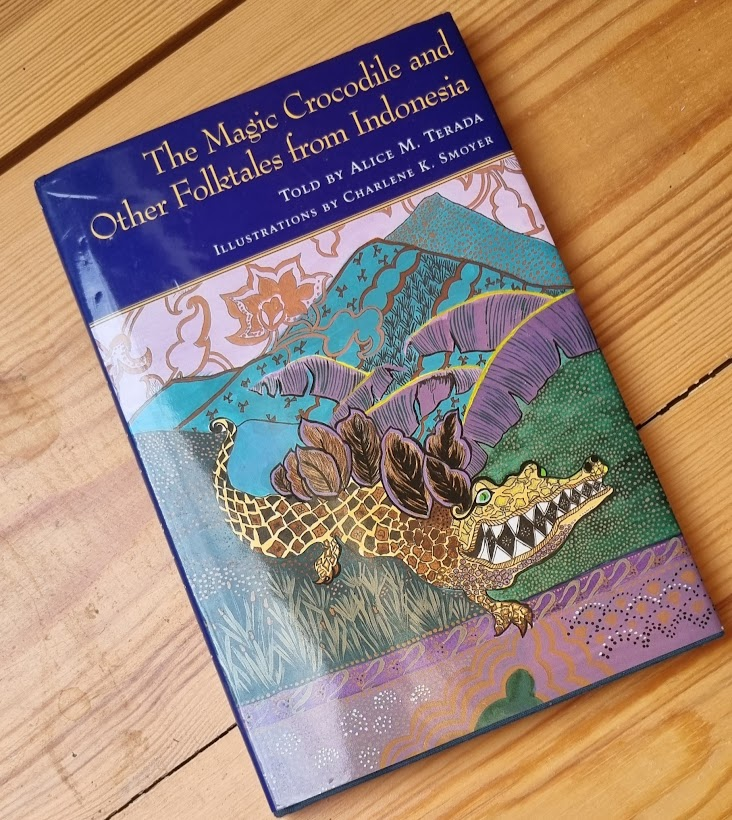
The source material was from this wonderful book:
My original idea was to atompunk The Magic Crocodile and I might still write that one day. But the concept was not really coming together so I moved on to the story of An Honest Man – a good solid core to build on but it lacked an emotional punch. The Green Princess had that in abundance. From there, well you’ll have to read it to find out.
Let me know if you’ve ever read another punked Indonesian folk tale, I’m hoping mine is the first but definitely not the last.
Looking ahead, the lovely people at Flame Tree have agreed to reprint my story An Absolute Amount of Sadness in their immigrant sci-fi anthology. You can check out the author list on their blog. Regulars may recognise the title, it first appeared in Fitting In by Mad Scientist Journal (sadly no longer with us). They also published “The Girl Who Gives Me Sunsets” in Utter Fabrication, which remains my favourite title from one of my stories. Look out for that and a new novella in 2023








 Ali Abbas