
END

To celebrate the new Star Wars movie, which I am properly excited about, here is a Luke and Vader shaggy dog story for you.
Spoilers from episodes 1-6, but I’m not seeing the new film til Christmas Eve.
Stick with it, that’s the point of a shaggy dog story! And feel free to reblog, if like me you have no sense of self respect 🙂
The Lay of the Last Jedi
Listen. Here’s a tale well loved and often told
Of a young man filled with woe and righteous fire
Who finds his home a ruined smoking pyre
Young walker of the sky, Luke the bold
Brave but oft times reckless, our hero faces
His nemesis in the story’s fifth or second part
Dread Vader, Darth of name and dark of heart
Master of asteroid sized bases
With all his pomp and power Darth Vader tries
To turn the will of this untempered boy
He lures and bends his mind with every ploy
To make Luke join the path of dark and lies
Mismatched: bare youth, cold machine man
They battle fiercely with the humming blade
Both Jedis fearless Obi Wan had made
One schooled by the Emperor, one by Han
But Vader is the master of sabre and the Force
Luke’s still fledgling skill cannot compare
To the power that Darth Vader brings to bear
Strength fails, he cannot last the course
Yet when at last the lad is on his knees
His sabre lost, and whooped his sorry arse
Vader does not land the coup de grace
But asks instead without a pretty please
“Join me, Skywalker, Jedi, Flying Ace
Why bind yourself to the weakness of the light
You see in me the dark’s o’erweening might
Accept what comes to pass with poise and grace.”
“Never,” Luke claims his sabre and replies
“You killed my gentle mentor Obi Wan
I will not lose myself to what you plan
Nor will I listen to your evil lies.”
Still Vader tries to tempt Luke to his side
For he sees in him the Force runs wild and strong
And winning Luke would right an ancient wrong
The hubris that lost Annakin his bride
“Luke, I am your father, you know this in your heart”
Luke howls his proud denial to this cold truth
But knows the claim requires no further proof
It pierces him, as if a poisoned dart
Luke’s sabre droops as doubt now fills his mind
Vader senses that he may have won
He purrs, “Join me, my lost beloved son
I will make you Prince o’er all living kind
We will stride the cosmos you and I
Our power unfettered, desires one
All that we do will never be undone
Nor will any dare our mastery to deny.”
But a face rises in young Luke’s inner eye
The princess he knows not as his long lost sister
(We hope because we know for sure he kissed her)
Which fills him with the strength to rise and cry
“I deny you as my father or my friend
You are the monster that consumed him from within
Enough with all your talking, let’s begin
To fight again so I may bring your end.”
Luke finds his strength renewed and battles hard
Vader feels the chill of fear is seeping in
For the boy is pressing close and may yet win
Desperate he plays his final card
“Luke, you cannot know the power of the dark,
Yoda and Obi Wan hid much from you
They feared you and the things that you may do
Let me show you now the merest spark.”
Before his son can voice his negative reply,
Vader presses onward with his suit.
“The future is to me not blind or mute
Beyond the veil all my senses still apply
I have cast my power and I tell you true
This Christmas all the gifts you will receive
And when I say the words you will believe
What the future holds in store for you.”
Luke’s Christmases had never brought elation
In the home of Uncle Owen and Aunt Beru
The moisture farm on which this young man grew
Was too poor a place for lavish celebration
The hardship he endured had cut him deep
An orphan who longed to hear a father say
“Here are precious things to mark the day
And bring you joy that will be yours to keep”
But Time and Fate heal all wounds and rifts
A princess and a smuggler are now his friends
This year he thought that he would see amends
And be hip deep in piles of wondrous gifts.
“Luke, there is a tree and gifts galore for you
A bike of BMX and three sixty Xbox One.
Three pairs of socks and stolen blaster gun
My words will echo in your power, you know them true.”
“How come, how come, what sorcery is this?
What fell and foul enchantment have you wrought
How did you pay, how was this knowledge bought
‘Tis true, ‘tis true your words I can’t dismiss.”
Vader takes his chance with an attack
The distracted Luke unable to resist
There is debris all around and in its midst
He falls helpless and prone onto his back
“Tell me,” he begs, now careless of his fate.
Darth Vader’s light sabre slowly descends,
Luke’s long and brave resistance surely ends
His father confidently lets him wait
The blade marks Luke’s face with scalding crescents
His smooth and beardless cheek is burned and marred
As in defeat his soul will soon be scarred
Vader fills with joy, for he has won
He shares his secret with his foundling son
“Luke, last symbol of my darling Padme’s love.
Skywalker, destined to rise above
Luke, my son, I have felt your presents.”
END
More of my writing here
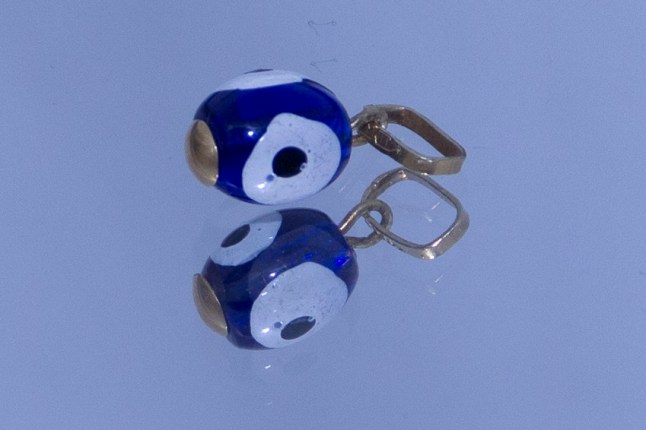
The concept / superstition of “the evil eye” is one that I have encountered in many cultures around the world. The trinket below is to ward off the gaze of those with evil intent.
More on the theme of EYE here
After the rain, under the light, black vs blue, and the moment of victory:

The Hindustan Times reports that Indian Prime Minister Narendra Modi is likely to address the senate of the University of Cambridge during his three-day visit to Britain in November. This has caused considerable consternation among those currently attending the University, whatever their capacity, and among alumni. The letter at the end of this link is addressed to the Vice Chancellor of the University requesting that he withdraw the invitation. It cites the reasons why such a person should not address the University, among which are his complicity in mass murder, and his systematic silencing of dissenting voices. As an alumnus I have signed the letter. I urge any fellow Cantabrigians reading this blog to consider doing so also.
When I promoted the letter on Facebook it drew two interesting observations from two friends of mine, both men of letters and learning, and in friendships that persist and thrive despite significant differences in our political leanings. The first observation was on whether this action constitutes an act of censorship. This friend is unwavering in his belief that freedom of speech should never be constrained, no matter how hateful the message, or the messenger, as this is a route to, and symptom of a more insidious tyranny. My other friend brought a considered tone of both treating a foreign dignitary with respect, and tempered this with a healthy dose of real politik. Alienating India, a key regional ally, and economic power would be damaging to our self interest. My friend and I learned the phrase “jaw jaw not war war” from the same history teacher decades ago. He went on to argue that by engaging with Mr Modi we have the opportunity to extend our influence over him, and over time draw him closer to our standards of openness and democracy.
I responded to both thus:
In the first instance the stance we are taking is not one of censorship, but censure. I admit though to relishing the irony of not letting a man who suppresses voices air his own. But as PM of India Modi does not lack for platforms from which he can spread his messages. The action is not to silence, but to withhold the cachet and implicit acceptance that goes with speaking at Cambridge when the speaker’s mores are so horribly at odds with the tolerance and intellectual freedom we so value.
Modi will undoubtedly speak at dinners hosted by Cameron and will be toasted by business leaders. The ballrooms and convention centres of Southall and Birmingham will be filled with Indian diaspora hanging off his every word, blind or willfully ignoring the atrocities in which he is complicit and hate mongering of which he is culpable.
Nor are the freedoms we love so cheap that we will hawk them in the bazaar to whoever passes with a purse full of copper. Have you been to India? The inequality there is of a scale you cannot comprehend if all you have seen is the local tragedy of the western homeless, sleeping in the rain shadow of skyscrapers. There an abject, withering poverty sits beside wealth beyond the dreams of avarice. Is it to those vaults of hoarded rupees we should sell our self respect.
Are we the world’s penniless drunk, sitting at the bar hoping the brash new money that walks in will buy a round for everyone? Are we the dissolute master returning to his suddenly wealthy manumitted slave with a shy smile, saying “I raised you up and only flogged you gently, and see how well you learned my lessons of violence and entitlement. Take me to lunch and tell me how you did it”?
I am not so readily bought. My Alma mater’s most precious asset is the ennoblement of mind it confers on those who pass through its halls and cloisters. People come to speak there to bask in its reflection. I hope the institution listens to the voices it has nurtured and withholds its light from this murderer of masses, from this silencer of voices.
And yet should we not hold him close? Talk to him rather than shun him, allow our sensibilities to seep into his own? It is a sentiment so self evidently true and right that it should immediately raise the hackles of suspicion. Look carefully at those who eschew estrangement from the things we despise and argue that we should bring our influence to bear. And then follow the sickly sweet scent of the money. It is as self serving a position to take in this instance as it is in our Prime Minister’s toadying with Saudi Arabia, and it is just as fruitless. I have not seen any evidence of influence bringing lasting political change to bear. More than that I think our influence in Britain is a myth we have spun to fill the emotional chasm caused by the loss of an empire. We keep close to other nations to pick their pockets or sell them our silver. Hard money and the consumption of things talks louder than the abstraction of influence. I suspect Churchill knew that in 1954 and his famous quote is just another pillar in his personal myth creation. Perhaps if he had been truthful he would have said, “more, more, not war war”.
END
More of my writing here
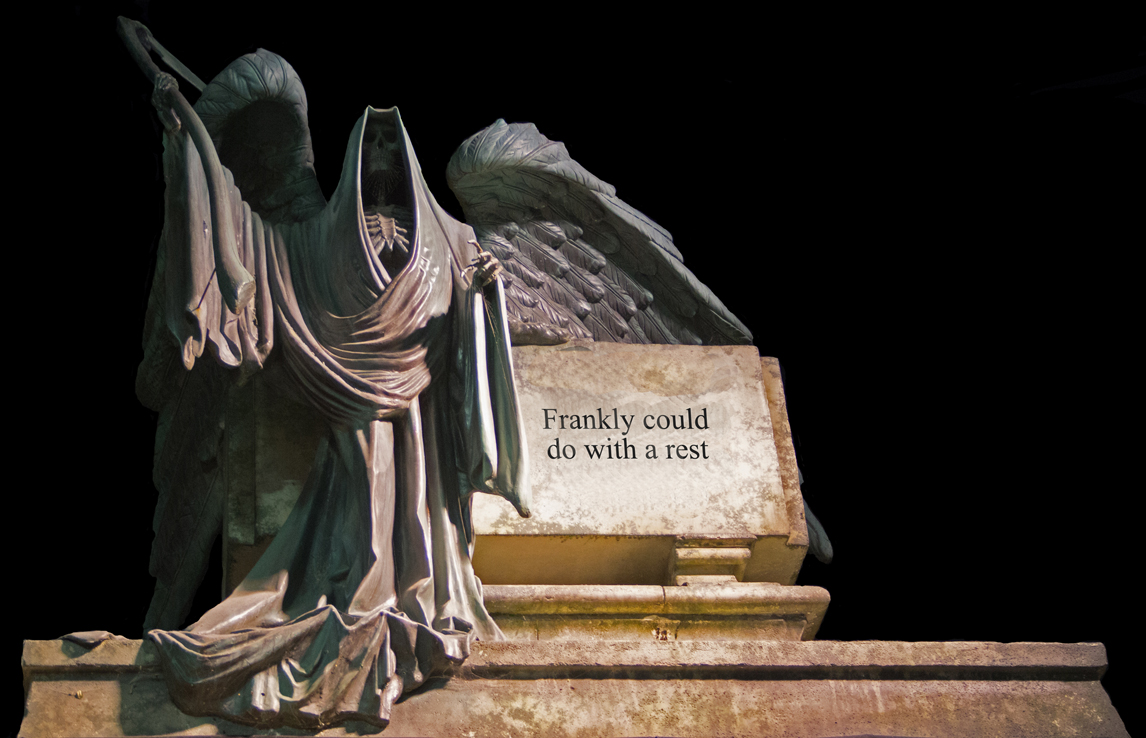
The quote is Milton from Paradise Lost.
Also in what is likely to become a series: The Way of All Flesh
Other Potterishness here.
End
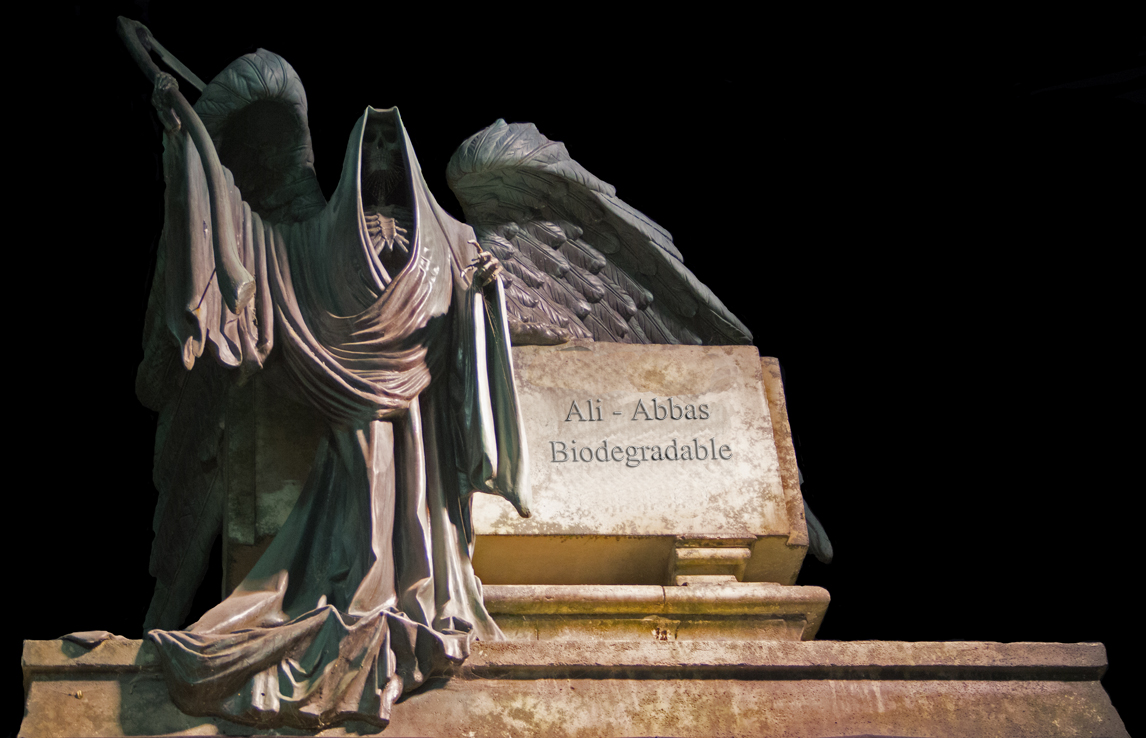
A little fun with the Riddle tomb from the Harry Potter studio tour. I may do this over and over with other text. I’m easily amused.
Other Potterishness here.
End

The city of Liverpool is dear to my heart, and in twenty years of visits there I have seen the impact of investment and development. Between the modernism and feats of architecture there are still traces of the city’s seafaring past.
On my most recent visit I went to the central library, and there I found a glorious transformation. The stairwell is visually stunning, and the place was packed out – so much for mean spirited prejudices against scousers.

Stairwell – Liverpool Central Library
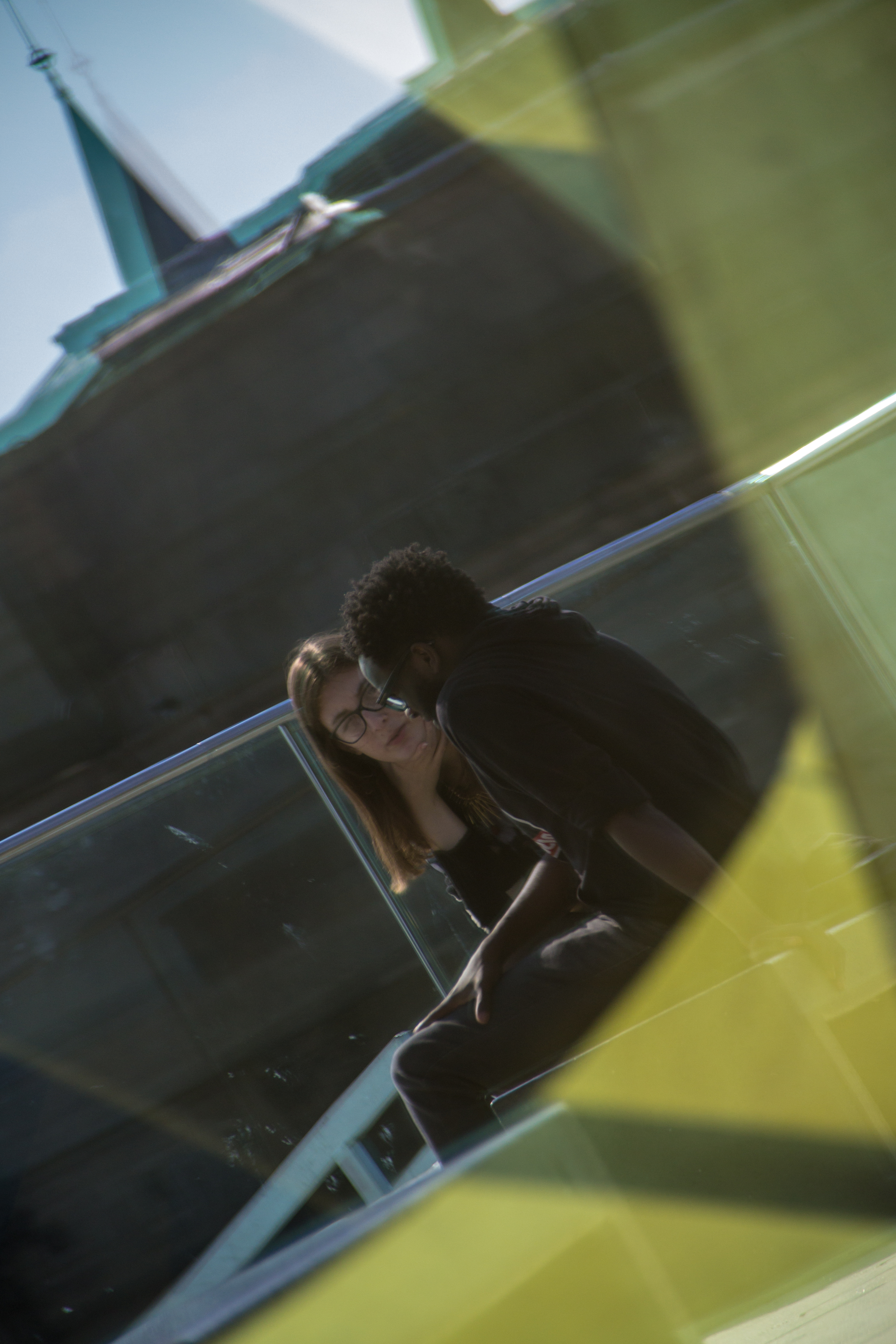
And as Liverpool has changed, so has society. I couldn’t resist the lovers on the roof:
END
With the tragic, and it seems entirely avoidable deaths in Mina this year, I am reminded of the stifling heat and chaos of leaving the tent city during my own Hajj in 2011.
The story of that particular trial follows:
–>
–>
Leaving Mina was an emotional rollercoaster. I went from despair to ecstasy with detour through all the flavours of anger.
Shia and Sunni leaving times are separate. You might think that the fewer overall numbers of Shia would make our exit shortly after midday a seamless and trouble free affair, with the true chaos to follow. How wrong, oh my Lord, how wrong.
Someone had pinched the wheelchair. It is heavy and does not fold up into a particularly compact shape, so I found it eventually outside one of the Iranian tents. The tingle of annoyance began here, let’s call it 1 on the overall scale, although my wife might argue my baseline of irritation is about 5.
A bit of deep breathing and the reassurance of locating Mum quickly helped me regain my Hajji calm. We joined the queue to go up the concrete steps to the exit gate. The stairs were split down the middle by a narrow ramp, theoretically a plausible way of rolling the wheelchair up without trying to carry it, but in practice gravity is as inevitable as the day of judgement and the stairs were very steep. I resorted to carrying it, surrounded by Iranian women, probably from the same tent that had attempted the wheelchair theft. In any event they seemed to have some momentum of antipathy towards me, and no sympathy for the fact that I was trying to lug a large metal object up steep stairs in a crowd. There were inevitably some bumps and scrapes.
A few people helpfully pointed to the ramp as if I was some kind of moron. I tried again, to show goodwill, and more people got hurt. When two objects try to occupy the same space the hard metal one is likely to win over the soft fleshy one. At times like these I think the grey matter at the head end of the soft fleshy things should take charge. Alas it seemed the folks around me were using the very soft fleshy bits at the back and halfway down for decision making.
By the time I got the top of the steps I was probably on a 6, but the relief of getting there eased me back to a 3.
Trust me on the maths, there were about a quarter of a million Shia attempting to leave Mina through one gate a couple of metres wide. In Hajj terms this is a reasonable but not overwhelming crowd. There were also police 4x4s, policemen on foot, and importantly, a huge crowd of Sunnis trying to go the other way and get into Mina before their own official departure time.
I spotted our group flag, pointed it out to mum, who was by now a couple of metres and a dozen bodies away, and steeled myself to forge through the intervening distance. At a guess I had about twenty metres to traverse. Progress was in inches. At every step the wheelchair caught on something. That something was invariably attached to a someone.
Sailors thrown overboard in a storm may feel like this as an unthinking, unreasoning force drags them away from the tantalising sight of safety.
I went sideways, I went backwards, and rarely did I go forwards. The police looked on impassively. At one point they tried to force their 4×4 through the crowd, and then gave up. I lost mum, I got shoved and shouted at, it was insanely hot, and everyone was trying to breathe the same air and sucking in each other’s carbon dioxide. And then the red mist came down.
I was in a hostile crowd with a significant weight of pointy metal. Things could have gone very badly, but some element of the Hajj spirit remained. I wasn’t going to force my way through, but I was not going to be moved. If someone pushed and hurt themselves on the wheelchair, so be it. I planted my feet, set my shoulders and secured my grip on the frame of the folded wheelchair.
My determination must have shown in my expression. My pleading and apologies had had no effect, but looking at my clenched jaw and flinty eyed glare the crowd parted minutely. I edged painstakingly through the crowd to the group flag. They were an eye of calm in the storm of humanity around me, and I was welcomed in with arms draped around my shoulders. There was no relief; there was no sign of mum.
I asked them to look after the wheelchair while I dived back into the writhing mass of bodies and those same welcoming arms held me back. I was on the verge of panic. I looked to the heavens and vowed a day’s fast if mum made it through the crowd safely.
An agonising minute passed, I scanned the crowd desperately, trying to see over the heads for her diminutive form. A second minute passed, bodies surged away from us and deeper into Mina. She would be carried back by the incoming Sunni tide as far as the Jamaraat before the crowd thinned, and that would be the best that I could hope for.
Raza’s wife emerged from the inexorable press of bodies. As the men at the outer edge of our group parted to let her through to safety, she said: “Ali bhai, I’ve found Auntie, she’s with me.”
Sure enough there was mum. I closed my eyes for a moment to give thanks and ushered her to safety too. I did not begrudge Allah the two minutes of panic. Any less than that would have required a more overt miracle of the moon splitting variety.
As the group slowly coalesced we moved en masse towards the main gates. I was at the edge with Raza and still towing the wheelchair when a lady from another group collapsed near us. It was a moment of real danger. Falling in a Hajj crowd has a high probability of ending in death.
I opened out the wheelchair as the crowd struggled to make some space, and the people with the lady helped her sit in it. Raza, with great presence of mind popped out a couple of glucose tablets which they gave her.
I realised then why I had fought to bring the wheelchair through the crowds, this lady needed it. I gave it up then. There was a man with the lady, he could have been brother or husband. I used hand signals to tell him to take the wheelchair. After demurring several times he accepted, only for the lady to surge to her feet, and decline the help. The glucose tablets had kicked in, and her momentary faint in the press and heat had passed.
We settled mum into the wheelchair, which was decidedly the worse for wear, and then began the long walk back to Azizia.
END
My Hajj diary is available here
Further extracts here
A blog about competition, regulation and privacy in the digital era
Speculative Fiction Magazine
I am Dom Joly. These be my writings...
A Shady Place Online
Stories. Essays. Comics.
An Irish literary journal; a shapeshifting production interested in all forms of writing
A Magazine of Fantasy
poetry,status videos,whatsaap status,sharyri,poetry lover,love video,song,bollywood,hollywood,my poetry,joker,film,drama,videoaudiopoetry4
The Blog of Aligarh Society of History and Archaeology [ASHA]
Let's not ask too many questions.
The best steampunk news, reviews, interviews and techniques
An Online Literary Journal and Small Press
Woh kare baat toh har lafz se khushboo aaye, Aisi boli wohi bole jise Urdu aaye. -Poet Ahmed Wasi-
gothic literary magazine
Author of Sci Fi and Fantasy
The Literary (or Junk) Writings of Leslie Muzingo
 Ali Abbas