
City of London School
Linked to Symmetry

City of London School
Linked to Symmetry

Thibbauld finished the picture with a few bold strokes of his pen, and sat back to let it dry. Most of the desks in the small office were empty, staffers tended to roll in around 11am and the hangers on and friends would drop in during the afternoon. His gaze fell through the open double doors onto the girl sitting in reception. She was always sitting in reception, on the tired brown leather sofa with legs crossed, leafing through the magazines, never touching the lidded paper cup of coffee she brought in with her.
He had never quite worked out if she was a girlfriend of one of the cartoonists, or a Brian Vichy groupie, one of the oddballs that fetishized the satirical magazine’s creators. She was too pretty to be either, but every time he looked around there she was, in his eye line.
He shrugged, it wasn’t his problem. He reached over for a framing rule and drew neat borders around his work. The boys in graphics would look after the speech bubbles and the scaling. The older writers said it was so much easier now than the days of contact adhesive and bromides, but there used to be a real team effort to get the paper out and a real connection with the publishing process. Although he would never admit this openly it all sounded like nostalgic nonsense to Thibbauld, and when the day came he’d be quite happy to do the computer work by himself too, rather than handing it off to some nerd. That was why he was glad to see the back of the Framers. The magazine was well rid of the absurd closed shop of specialists that drew the borders around cartoons. Nevertheless he dutifully went out on strike on their behalf one day a week. Striking was as quintessentially French as cheese or wine, and he loved his country.
On his way out he poked his head into the accounting office. Anders was the only other person working this morning, a Belgian accountant appointed by the German owner who had pulled the French magazine away from the brink of bankruptcy. Keeping a job was worth the ridicule of working for a German with a sense of humour.
“I’m done for the day. I’ll catch you later.” He said to the top of the bald head leaning over a pile of invoices.
“Are you in tomorrow?” Anders asked, blinking as he looked up from the paperwork.
“On strike tomorrow, it should be in the book.”
“What for this time?”
“Runners, I think. You guys sacked the boys that took the artwork from one department to another.”
“You mean carried it a couple of meters from one desk to another?” Anders raised an eyebrow.
Thibbauld laughed, unlike some of the others he got on well with the diminutive Belgian. “How are the books looking?” He asked gesturing to the piles of paper.
“We’re one edition away from disaster, as usual. To be honest without the regular strikes Brian Vichy magazine be closed down and I’d be selling the original art on eBay to pay off the creditors.”
Anders seemed to be in the mood to talk, and Thibbauld had nowhere else to be, so he stepped into the cramped office and took the only other seat. “You’re saying strikes are a good thing?”
Anders sighed and scrubbed his eyes. He was usually first in and last out, trying to balance the books, putting off creditors and chasing debtors. “You’re a smart guy Thibbauld. Look around you. We barely shift fifty thousand copies in a month. We have no online presence because that would mean producing an English version, and if you remember we had a strike about that. To run this tin pot operation we have a dozen staff writers and artists, and as many editors as a national paper.” He pointed back out into the office. “And none of them are here half the time. You don’t get paid when you go on strike. Strikes are what make this business feasible.”
“So if we run out of things to strike about…” Thibbauld started.
“The business dies.” Anders finished. “So go and enjoy your day off. I’ll do the maths and make sure you don’t get paid for it, and we’ll limp on for another month.” With that Anders picked up a new stack of papers and Thibbauld took his cue to leave, but still did not make it out of the office. Henri had arrived and was shucking off his coat. The man was a BV legend. He wrote scathing parodies of current politicians cast as characters in famous books and plays. It was a mark of distinction for someone in public life to be referenced, however obliquely in Henri’s prose, even as they squirmed under the dissection of their character or policies. Until you had been Henried you hadn’t arrived.
Thibbauld had been meaning to talk to him for weeks, but the revered writer appeared when it suited him, sometimes only to drop a script on a junior editor’s desk and then leave again, the words hammered out on an ancient typewriter. They exchanged pleasantries before Thibbauld picked up one of the thin sheets of white paper that formed little mole hills all around the office.
“I’ve been meaning to ask you about something,” he said to the older man. “I’ve got an idea for a cartoon but I don’t know where to take it.” Henri gestured for him to go on so he picked up a pencil and sketched a face. The nose was hooked, the features long. He sketched it again on a fresh paper, and then turned them both to Henri. “The same face, the same characteristics.” Henri nodded. Thibbauld turned the papers back and drew in a few more lines. Around the first face he drew a turban and a beard, on the other a skull cap and curls dropping down by the ears. He turned them back to Henri. “I want to do something about the Arab – Israeli thing, drawing out their similarities.”
Henri looked at the pictures for a minute, and then very slowly he pushed the Arab picture back to Thibbauld, and crumped the other into a ball and dropped it into the bin beside his desk. “You’ve got a good eye kid,” he said giving Thibbauld an appraising look. “But take my advice and stick to things that will get you killed, not sacked.” With that he turned away and began pulling some typed pages out of his battered leather satchel. The audience was over.
On his way out Thibbauld passed the girl in reception, but she did not look up from her magazine.
~BV~
Thibbauld’s insight into the state of the finances took another sharp step when he came back into work a couple of days later. He hadn’t bothered picketing for the Framers, whose strike day fell immediately after the Runners, instead he had been reading some of the online journals that his colleagues frowned upon. Print, they argued, made things real and meant you could not hide behind an internet mask. He had barely settled into his seat when Michel, the editor in chief, called him in for a meeting, and in a rare breach of Brian Vichy protocol closed the door of his private office. With Anders’ words still fresh in his mind Thibbauld mentally prepared himself to be sacked, running through the money he had put by, how long it would last him, and wondering if anyone would strike on his behalf. It turned out things were worse than that.
“You asked me to give you more responsibility around here,” Michel said. “Well now is your chance.” Thibbauld searched Michel’s face for some sign of what was coming, but he just looked worn out. “Ralf is coming over next week and he wants some ideas about how we can save the paper. I think he’s ready to pull the plug on his investment.” Michel took off his glasses and cleaned them with the edge of his shirt. “I want you to come up with some ideas we can share with him.”
“Michel, I’m a cartoonist, I have a degree in design. What the hell do I know about how to save a paper?”
“You wanted a bigger role around here, earn it.” Michel stood up and went to the door. “Use your next couple of strike days and work on it from your apartment. I’ll square it with Anders so you get paid.” He opened the door and ushered Thibbauld out. “Call me with the details, and we’ll discuss it with Ralf this time next week.”
And that was that, from nowhere Michel had dumped the problem in his lap. Thibbauld sauntered out of the office, feeling much less at ease than he let on. He lit up a cigarette while he pushing through the swing door to the street. Behind him the girl sitting reception crossed her legs and went on reading.
He took a turn around the park. After five years drawing for Brian Vichy, the only nationwide satirical magazine left in France, he had some feel for the business but he wasn’t remotely close to the numbers. They paid someone to print the magazine and made decisions about which pages would be in colour. They sold adverts for t-shirts with radical slogans and favourite BV quotes from the last thirty years, and they tried to sell out the print run. That was all he knew. Michel knew that was all he knew. It was a cool day in Spring but a trickle of sweat crawled down his back. Thibbauld was being set up for a fall.
His mind wandered back to what Anders had said. Too many staffers, too many editors. He remembered his own early days sending off his cartoons to newspapers and journals, hoping that one would be picked up and he might make a few euros off it. The few times he had succeeded before landing the job at Brian Vichy everyone he knew had bought a copy of whatever rag had published his work out of friendship and solidarity. His mind began spinning with the germ of an idea.
~BV~
A week later Thibbauld was in a characterless meeting room in Ralf’s hotel. They were holding the meeting away from the BV offices because there was little room for privacy there, and conversations behind closed doors drew attention. Ralf was all German, tall and blond with piercing blue eyes that did not miss a thing. Thibbauld had discussed some of his ideas with Michel, and he opened with those, reading off a piece of drawing paper on which he had made notes, and trying to ignore the projector and screen that suggested Ralf had expected a PowerPoint presentation.
“I think the key issue is an editorial one.” Michel had not been happy about that line, but had nothing to offer in its place, which meant Thibbauld was free to run with it. “Our most controversial issues are the ones that sell the most, even if it is so people can burn them in front of our offices.”
He paused to look up at Ralf and gauge the man’s mood, but the new owner’s face was expressionless. He floundered a little, realising he should have been able to back this up with figures, he sensed Michel leaning slightly away from him, as if creating a distance. He’d have to wing it. “When we ran the Sarkozy and Merkel story and the last Mohammed pictures we sold the entire print run of those issues. The paper only works if we sell enough copies and we only do that if we generate publicity.” Ralf gave a faint nod, Thibbauld felt a relieved sweat flush over his body. Time to play the joker with a line he had come up with by himself.
“The problem is that the freshest, most controversial stuff we get is from kids and freelancers. But we can’t afford to use it because all the money we have goes on the staffers, and if we’re paying for them already then we may as well use the safer things that they produce.” Thibbauld threw the idea out in a rush, afraid that Michel, who had started forward in his seat, would interrupt him. “I think we can get the costs down, and get more fresh ideas in if we get rid of most of the staffers and the editorial team.” He didn’t dare look sideways to Michel, but he could sense the vein throbbing in the older man’s head. “And what is even better is that all those kids and freelancers will promote us to all their friends.”
Ralf looked at him over steepled fingers, and then turned to Michel. “What do you think?”
Michel swallowed hard, trying to get a grip on his fury. “I think,” he said through clenched teeth, “that if we get rid of a large number of people who have worked at BV for years we will lose the soul of the magazine and we will definitely have a strike.”
“You French are always on strike, I don’t really care about that, except that we need enough material to get the next edition out.” Ralf said dismissively. He looked Thibbauld up and down. “I like the way you think, very pragmatic. Have you got anything else?”
“There’s always the premises. We don’t need a central location, and the place is never more than one third full. Freelancers would work in their own homes, we could move somewhere cheaper.”
Ralf gave a little smile at that. He turned back to Michel. “Show me you can save the paper with the kind of material this guy is suggesting, and you can save your friends’ jobs, and the cushy office. You’ve got the next edition to get it right, and then we go for the nuclear option.”
Outside Thibbauld slung his coat over his shoulder and lit up a cigarette. It was cold but he still felt hot from the meeting, and he needed to gather his thoughts. He’d done better than expected. The new boss liked his ideas and he had shown Michel up as a dinosaur. Things might be uncomfortable for a while, but if the next edition sold well everyone would relax, and if it didn’t, well at least he was in Ralf’s good books. He was stubbing out the cigarette on the pavement when he was shoved from behind. Michel had come storming out of the hotel where he had had a further discussion with Ralf.
“What the hell were you playing at?”
“Saving my job,” Thibbauld replied nonchalantly, picking up his fallen coat. “And saving yours too.”
~BV~
A week later the editorial meeting seethed. Thibbauld could tell from the reactions of the senior staffers that Michel had shared some of the details of the meeting with Ralf. No one could say anything to him directly as Ralf was sitting in on the meeting, but the undercurrent was unmistakeable.
The last edition had hit the shelves and underwhelmed their audience. Boxes of unsold copies had started coming back within days of publication as shops and news stands stopped making room for BV on their shelves. The next edition was not coming together well either. They had little time before committing to the print run, and the only half decent material was a one page article from Henri and some of the regular cartoon strips.
They argued in increasingly heated tones and gestures as copies of submitted material were shoved under each other’s noses and waved angrily in the air. The noise grew to a crescendo until there was a sudden bang. Ralf had stood up, picked up one of the ubiquitous piles of blank paper and hit it against the side of the table. The ensuing silence was shocked and complete. The tall German towered at the head of the table, and then flung the entire ream across the room. “There is your famous French battle flag. The proud white eagle on the white background. You will sit here and bicker and argue while the magazine dies around you.”
Thibbauld felt the colour draining from the faces around him. If he was going to back up the bold statements he made to Ralf at the hotel, this was the moment. He took one of the scattered sheets, and as all his colleagues watched he drew the Arab face on a skinny body, and a bomb. He pushed the picture into the middle of the table. “If we’re going down, let’s go down in flames.”
There was silence around the table. The last time they had done something lampooning Muslims there had been protests and scuffles outside the building. One of the windows to the building was still boarded up while they argued with the landlord who should pay to get it fixed.
“Well?” Ralf asked mildly. His tone did not fool anyone, there was an axe waiting to fall behind it.
Thibbauld searched under the pile of papers and pulled out a sheet from a freelancer. “This is from a kid at university, it’s good and all his friends will buy a copy, plus all the other doodlers hoping we’ll publish them too.” It was a half page with the two Popes and a huddle of hollow eyed children.
Slowly the others picked up the theme, pulling out the most controversial prose, scathing poems and unfettered artwork. Over the course of the next two hours they laid out the entire issue, with no one leaving the room for a coffee or a smoke break.
~BV~
Every other man in the room had a beard. Thibbauld rubbed his stubbly chin self-consciously. He couldn’t really follow the rant from the animated speaker on the podium, but everyone else seemed to nodding along and agreeing, so he did the same. Streams of Arabic were inserted seamlessly into a flow of French rhetoric. The speaker, a young man with a long beard and ill fitting clothes, was waving around a book which Thibbauld assumed was the Quran.
The small lecture theatre was half full, with all the men on one side and the women on the other. The women were bold and defiant in their headscarves, and seemed as much in agreement with the speaker as the men. One of them frowned at him when she noticed him looking over, and he jerked his gaze back to the podium.
When people began to drift out Thibbauld edged his way to towards the speaker. He was jostled along the way by a couple of stern faced guys, one of whom indicated he should state his business with a sharp jerk of his hairy chin. “I need to talk to your man, I have some information he may find interesting.” They looked him up and down, and then one of them said, “Information goes to Saad,” he pointed to a bookish looking young man seated in the corner engrossed in a smart phone.
As Thibbauld made his way over he could feel the two men watching him, keeping a close eye on the outsider. He tried to suppress a shudder, this was his city, his university, and he shouldn’t have to feel like the stranger here. Saad was slightly built and earnest looking, his attempt at the long beard was only partially successful. “How can I help you?” he asked Thibbauld.
“I work for a magazine,” Thibbauld started, fishing in his pocket for a Brian Vichy card.
“We don’t do interviews.”
“It’s not that,” Thibbauld shook his head. “Look, it’s a satirical magazine, but I think this time they’re going too far with some stuff, and I thought you should know. Maybe if you make a complaint you can get it stopped.”
Saad seemed to gain interest. “What sort of stuff?” Thibbauld pulled out his own phone and showed some pictures he’d taken of the proof copies. The young man’s face went grim, then he looked at Thibbauld suspiciously. “Why are you showing me this?”
“I’m a sketch writer,” Thibbauld lied smoothly. “I took the job to write satire, but this” he pointed to the screen, “this is just racist. It’s not making a point it is just trying to provoke a response. The problem is that I’m too junior for anyone to take my complaint seriously, and I can’t afford to lose my job over it.” He gave Saad his trade mark shrug, “I have principles, but I’ve got to eat, so I thought if you guys made a complaint you could get this stuff taken out. They might put more of my work in to fill the gaps and I’ll get paid more too.”
His reasoning was greeted with a slow nod. “I’ll need some evidence to get people mobilised and make a complaint.” Saad said.
Thibbauld nodded and then took back his phone. “I can’t email you the photos, it’ll be too easy to trace them back to me, and I’ll lose my job, but I can Bluetooth them to your phone, and then you’ve got them without it being traceable.”
“Fair enough, thanks bro, you’ve done a good thing. When is a good day to have a protest? There’s no point turning up when you’re closed.”
“We have an editorial meeting to sign off the proofs next week, on Wednesday, that’s your best bet.”
They exchanged the pictures and then Thibbauld left, this time with a less frosty glare from the others. He’d already been to his local catholic church to get them interested. Over the next few days BV would be back in the headlines and they’d have a reasonable chance of selling the entire print run.
~BV~
There was a nervous buzz in the office; word of their intentions was spreading, partly through Thibbauld’s efforts and partly through the usual loose tongues in their gossipy little world. Some of the national newspapers had been sniffing around and they had also triggered the interest of intelligence agencies. The interior ministry had just sent someone round to tell them to be careful and take away one of the proof copies, and a day later a policeman was conspicuously placed near the front entrance. The British had their onion selling cyclist circling the block, refusing to sell anything to anyone in an appalling accent. That was at least better than the Americans who did not seem to realise that the French spoke a different language, and that minivans with blacked out windows drew even more attention than the bicycling British buffoon.
A couple of outlets had refused to take the copy just based on the rumours and early protests, but others had sensed the potential to make money and upped their orders, it finally looked like Brian Vichy would be able to pay off some debts.
On the day of the editorial meeting Thibbauld got a call from a withheld number just as the team were gathering. It was Saad. “Bro, I need to talk to you, come outside for a minute.” Thibbauld looked around; it would take a while for everyone to settle down. He waved his cigarettes at Michel, who saw him then pointedly looked away. Going through reception Thibbauld idly noticed the girl was no longer, there. A crowd had gathered outside, he dodged to one side, barely missing the perpetual dog mess on the pavement, and ducked into a side street, lighting up with a grateful deep breath.
There was no sign of Saad. He waited through the length of his cigarette, and then decided to head back inside. That was when the noise and the shouting started. There was a screech of tyres and the dull rattle of gunfire. A priest sprinted past Thibbauld followed by other protestors dropping their placards as they fled. There was more gunfire, punctuated by screams and glass breaking. In the distance there was a police siren. The firing stopped and the siren grew closer. Thibbauld leaned against the wall and sank slowly to his knees. His phone vibrated in his pocket. It was a text, once again from a withheld number. It simply said, “You’re welcome.”
~BV~
When he emerged from the side street the police were cordoning off the area, and there were already three ambulances pulled up at odd angles. Anders was sitting on the step to the building holding a cloth to a cut on his head. Thibbauld slipped through a gap in the cordon and sat down beside him. The Belgian stared at him numbly, not speaking for several minutes. He looked away and finally asked, “Where were you?”
“Smoke break.”
“And they say those things will kill you.”
“What happened?”
“Gun men, shouting some Arabic stuff.” He stopped as a stretcher was carried past. Thibbauld’s gut clenched as he recognised Michel’s limp hand hanging down. “They went straight for the editorial meeting,” Anders continued as they watched the stretcher being loaded into an ambulance as another pulled up. The paramedics were in no hurry, Michel was already dead. “I just got hit by flying glass.”
Thibbauld offered him a cigarette, which he refused. They sat together on the steps in silence as the police and paramedics bustled around ineffectually.
~BV~
He didn’t mention the phone call or the text, nor did he mention the trip to the student meeting at the university. The police weren’t that interested either, the gunmen were on the loose and questioning one of the remaining Brian Vichy heroes wasn’t high on the agenda. They all went through the motions and then let Thibbauld go with firm commiserating handshakes. As he left the police station his phone rang. He stared at it guiltily for a while before he realised it was Ralf. The German had flown home a couple of days before the shooting, with the production of the magazine supposedly well in hand.
“How are you doing?” Ralf asked.
“Ok I guess. It’s kind of difficult to process.”
“Well I need you to be better than OK, and I need that now.”
“What?”
“Orders are through the roof and we have very few people left. I’m going to let the current issue go out as is, and I want you to start working on a memorial issue. Dig up all the unpublished stuff from the ones who died and knock it together, I want to print in two weeks.”
“Ralf, you can’t be serious, we have nothing, no offices, no computers, no one to do the work.”
“Haven’t you been watching the news?”
“No, they keep showing faces of dead people that I used to work with.” He didn’t mention the churning guilt he felt every time they read out the names, or the image of Michel’s limp hand that haunted his sleep.
“Look kid, I know it’s hard, but we have offers of help coming in from all sides. We play this right and we can bank some big sales, and then with BV on your CV you could land a regular slot on one of the national papers.”
Thibbauld had to hand it to Ralf, the man could be very convincing. “How many sales?”
“My estimate is three million for the next one, then two, maybe two point five for the one after, depending on how sentimental people are feeling. Then we can cut straight over to your business model, smaller premises, fewer people and more money for everyone.” Ralf was in full flow now, there was no hint of residual sorrow in his voice, this was a business opportunity and smart practical people would take it.
Thibbauld found himself warming to the cold German. “I want to do the covers.”
He could almost sense Ralf smiling down the phone line. “You got it kid.”
END
If you are interested in my storytelling look here.
More thoughts on the growth of terror in I am Cassandra, you are Niemoller and The Cancer Magnet.
Some reflections on Satire and Faith in Islam Needs Satire
Tangential and sometimes more lighthearted reflections on faith can be found in extracts from my Hajj diary here scroll down a bit for the narratives.
As it is that time of year again…
We’ve all been there. Filled with good intentions a week before, our minds bubbling with exotic and innovative ideas to surprise and delight our significant other, we’re mentally prepared for V day. And then Alex calls for a drink and Ben needs a favour and Charlie has ticket to the football and before you know it its Feb 13th and you’re out of time.
Welcome fellow travellers to the wonderful world of the Valentine’s book – cheap, easy to acquire, personalised and sure to make you look thoughtful and romantic, as long as you choose the right one.
If you have a day in hand go for a physical book. You can get expedited delivery from online sellers, and in London at least you can track down a book shop on every other high street. Poems are the obvious choice because fiction spans so many story lines you might…
View original post 943 more words
http://solarcide.com/stories/varietyperformance/sing-by-ali-abbas/
My story featured on Solarcide. Yay.
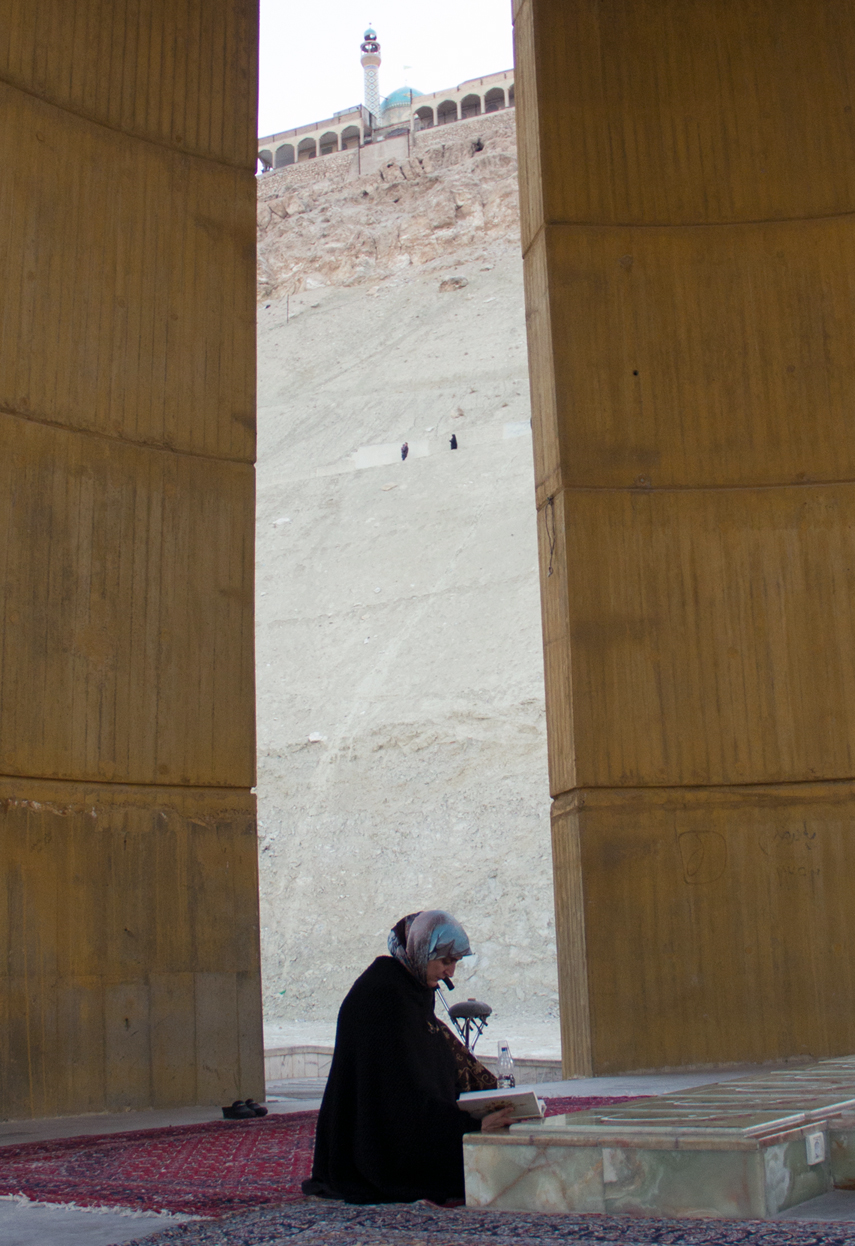
Tomb of the Unknown Martyr – near Qom, Iran
Weekly Photo Challenge Serenity
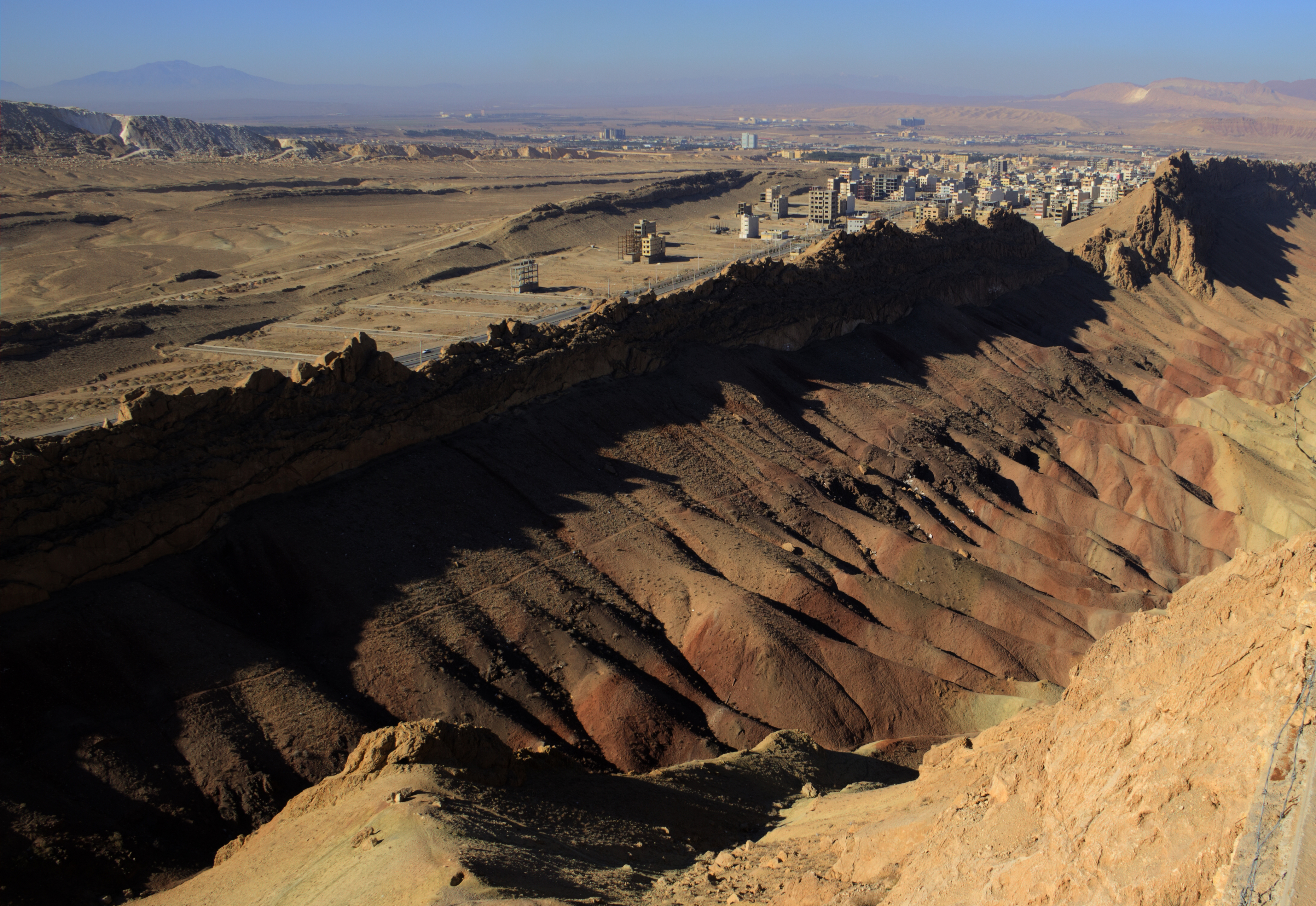
Camel Back Ridge – from Mount Khisr near Qom, Iran
Weekly Photo Challenge: Shadowed
only a week late…
The ClusterWars space opera is busy going nowhere, but the Ready Set Done prompt stung me into action, and I had the Salinger quote at no.3 here buzzing in my head.
I think this works stand alone, but it will make more sense to those who have read The Lethe Cluster.
Memories
He turned the little data chip over and over in his hands. If he believed them this was all that remained of his memories: a square of gel in a plastic sleeve. He turned it over again and then flipped it open, shaking out the malleable little square onto the receiver pad.
He didn’t know if he wanted this, and his fingers wavered over the command keys. There was freedom in not knowing. His life was his to shape and rebuild as he chose, with no ties or obligations. In the people around him he could see webs of commitments, constraints on actions and behaviour. Now, before he pressed the button, there were no such restrictions on him. It could all change.
And yet there was something missing. He sensed within the absence of his memories a darker void. Once there had been a fulcrum, a point about which his life pivoted, Living without it was disorientating, and he did not know why. The ignorance gnawed at him.
There was no one to ask, no opinion to be sought. They had left him in the little square room with the holo table and a single chair to make his next move. No doubt they had tried to examine the chip already and failed. That he had it in his hands was a sign they needed to know as well. The table would be monitored, whatever he saw, they would also see.
He was tempted to put the chip away out of sheer bloody mindedness. He was tired of the feeling that everyone knew more about him than he did, and yet somehow some information he had access to was valuable.
He took a deep breath. He had dreamed last night of running through a shadowed gallery made of soaring archways and brick walls. Hooks where fine works of art should have hung were empty, as were the pedestals for sculptures. Someone turned the corners ahead of him, always just flitting out of sight. He needed to know, and damn them all if they found out as well.
He pressed the button.
The holo viewer flickered into life, the chip was empty but for one file. He turned his palm in the holo field to unlock the security protocols. The file opened with a twist of his fingers and a picture came up. His breath and heartbeat stopped.
A woman stood in a curved spill of light on a balcony, her hair shimmering and golden, almost indistinguishable from the dress that clung to her body and pooled at her feet. She stood at the margins of the darkness and the light, her face turned away looking into the distance. The bubbles in her glass were frozen in that moment in time.
Like him she straddled the known and the unknown. There was certainty in what lay behind her in the room which cast its glow outside. There was a promise in the darkness. He could tell in the set of her shoulders and the wariness in her posture that she knew promises could be broken. He could tell from the tilt of the glass in her hand that she wanted more than the certainty.
He tried turning the image to see her face, but it was a still single frame, with depth, but lacking the all-round detail of a true holo image. He zoomed in, analysing. There was no ring on the left hand that held her glass. Her one visible ear was lobeless and adorned with a single diamond stud. There was a tattoo of a flower on her bare left shoulder.
He felt a sting of recognition. In two twists of his fingers the image of the flower was cropped and searched. A Ceti Rose. He knew this woman.
The room lurched, as if gravity itself had changed, as if the orbit of his life had redefined its locus. He tried to stand, his feet were unable to plant themselves on the ground, his balance was lost. He tried to hold onto the table, but there was no strength in his fingers, they slapped ineffectually at the table as he fell to the floor, the seat gliding away to hit the wall.
Blood thundered in his head in a roar of reconnection. He knew this woman. His wife, Anna, on the day he had proposed to her.
END
Another Ed’s challenge, this time rainbows, so a repost of recent one.
 In my defence this was taken on my Nexus 7 through a window in need of cleaning.

The Shard dominates the south bank between Tower Bridge and Southwark Bridge. Whatever other feelings it may inspire it is also useful if, like me, you like to learn an area by getting thoroughly lost in it, and then need to find your way back.
In it shadows you can find odd moments like this where any number of interpretations of angular shapes collide. This is in the little cut through from the north end of Borough Market to Hays Galleria. The Shard is of course ever present.
With this handy reference point I have started to learn my way around Bermondsey. Perhaps not something a Finchley boy should admit to.
Back on the civilised side of the river and looking back at the Mayoral Folly, More London Place, and it.
A blog about competition, regulation and privacy in the digital era
Speculative Fiction Magazine
I am Dom Joly. These be my writings...
A Shady Place Online
Stories. Essays. Comics.
An Irish literary journal; a shapeshifting production interested in all forms of writing
A Magazine of Fantasy
poetry,status videos,whatsaap status,sharyri,poetry lover,love video,song,bollywood,hollywood,my poetry,joker,film,drama,videoaudiopoetry4
The Blog of Aligarh Society of History and Archaeology [ASHA]
Let's not ask too many questions.
The best steampunk news, reviews, interviews and techniques
An Online Literary Journal and Small Press
Woh kare baat toh har lafz se khushboo aaye, Aisi boli wohi bole jise Urdu aaye. -Poet Ahmed Wasi-
gothic literary magazine
Author of Sci Fi and Fantasy
The Literary (or Junk) Writings of Leslie Muzingo


 Ali Abbas