The Diversity Deal

unity

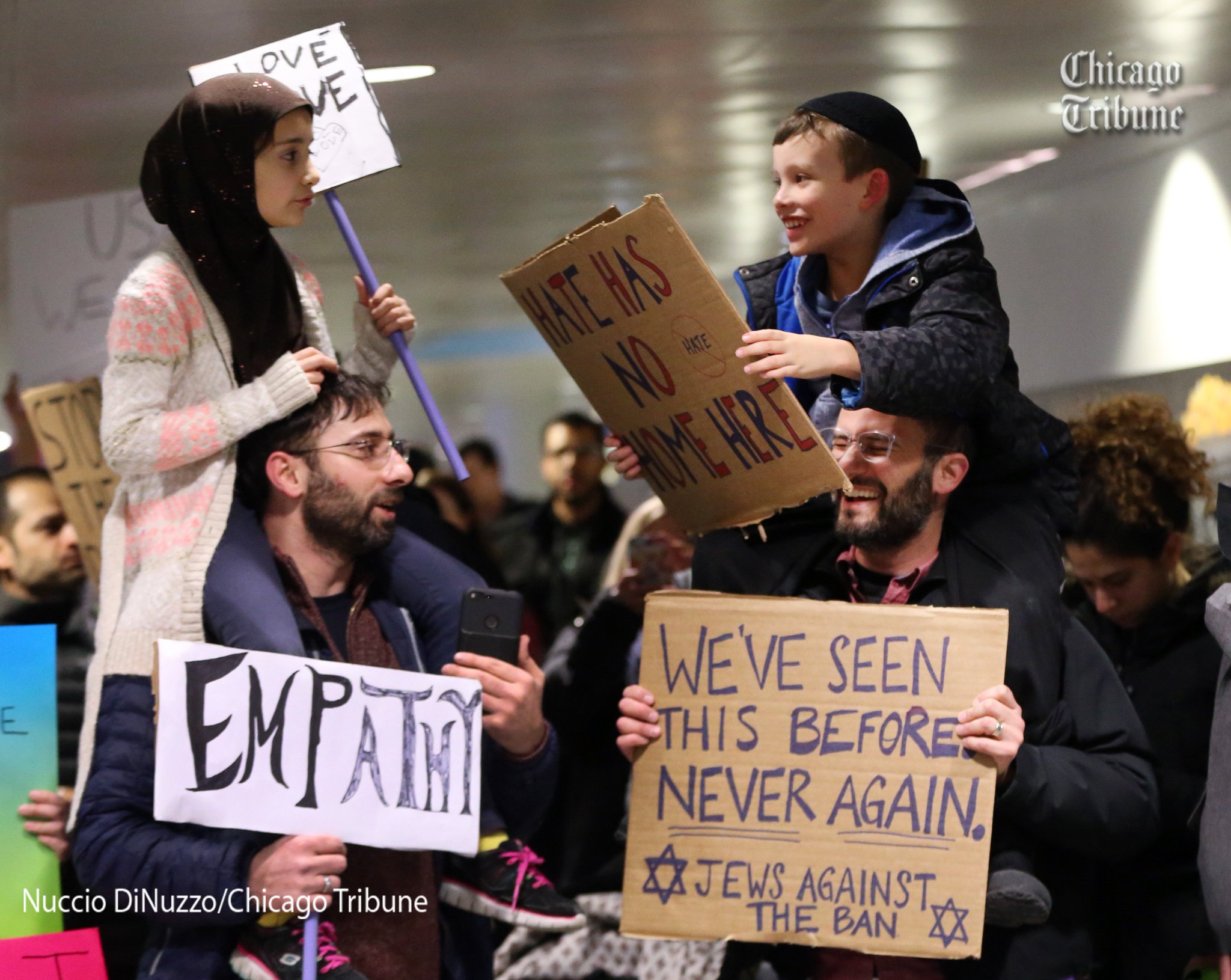
Diversity and inclusion are wonderful when they work in your favour. In the last week, Muslims like myself have been the beneficiaries of the world’s love and understanding. At airports around the United States people with open, liberal minds have acknowledged that most of us are just ordinary folk. We only want to live and work in peace and free from fear. Owing no allegiance other than our shared humanity these generous and passionate people stood up for our rights and our cause.

I’ll admit that I am conflicted. There are so many sides to what has happened that I am not sure how to reconcile them all. Let me lay them out for you.

Perhaps easiest to understand is that I have been overwhelmed by the outpouring of love in the face of an act of hate. It is a bright light in a time of encroaching darkness. I salute all those who have given of their time and skill and energy in the cause of humanity. May whatever powers you believe in uplift you.

But this has also left me with a sense of dread. I fear many Muslims do not understand that this is a two-way deal. We may be heartened by the efforts of others on our behalf, but what will we do when it is time for us to stand up and be counted? I have no doubt that the Trumpists are coming for us all. So, answer me this my Muslim brethren:

You want to live in peace, free from fear, with equal rights to your neighbour, and to practice your beliefs without interference. But if that neighbour is from the LGBT community and will not be served in a local store will you campaign on their behalf? That neighbour’s right to live without molestation is the same as yours.

What if that neighbour is a woman exercising her right to choose, and finds herself denied medical care; will you step forward and raise your voice? Her right to choose what to do with her body is the same as yours.

When emboldened fascists daub swastikas on the local synagogue will you be there to wash the walls and help protect your fearful neighbours? Their right to religious freedom is the same as yours.

All the things you want for yourself you have to be willing to offer to others, without stinting or reservation. If you’re unwilling to do that then you are unworthy of any shred of what has been put on the line for you this week.

That deal has embedded in it the Islamic concept of Adl – justice. What you want for yourself you must want for others, irrespective of what they believe and how they want to live. Freedom for Muslims means freedom for non-Muslims. If you aren’t able to sign up that then sign up to Trump or ISIS, they both believe in one law for them, and one law for everyone else. You think I am exaggerating? See if you can read beyond the first few lines of this from Breitbart without vomiting. I couldn’t. The Alt-Right would restrict women’s education in an echo of the Taliban, and it is their poison being whispered into Trump’s ear.

So how do you reconcile the freedoms you are morally bound to protect, if they war with your own beliefs? That, my friends is a test of faith. If you believe that the message we bear is the Truth then trust in it. Welcome everyone and let your capacity to love and accept bring them closer to you. Or maybe you and I just aren’t the same kind of Muslims. Maybe you are a Muslim that takes pride in the bloody history of Islam of the sword. If so, ISIS is waiting for you, what are you waiting for? My Islam is the one of mercy for mankind.

And in that internal argument of faith lies another source of discomfort. There are countries that export terrorism. Decades of Saudi money peddling the spiritually bereft Wahabi / Salafist ideology has created a generation of emotionally and mentally damaged people, willing to believe violence is an answer. In places this monstrosity has replaced mainstream Islamic thinking. My real dissension with the Trump ban is not its existence, every nation has the right to protect its borders and vet those entering for potential threats. But when that ban specifically excludes the nation that provided the 9/11 hijackers I am left aghast. If the ban had been properly consulted on, discerningly targeted and professionally implemented, it might have been a valid policy. Instead it is an act of naked racism, spiced with a toxic dose of Trump’s personal commercial interests.

And that last leaves me with a sense of fear. I live in London. I only have to contend with the backwash of Brexit and Theresa May trying to sell the country to the highest bidder. But I have friends and loved ones in the US. They are people who cling fiercely to liberal ideals, and carry a deep respect for their fellow humans, irrespective of creed or colour. I fear for them, because their chief executive is trampling on every concept of value in pursuit of his own limited interests. The coming battle for America’s soul is one in which there will be casualties, and my friends are people of conscience who will stand and make their presence felt. I fear for them almost as much as I fear for family in Pakistan who live in the shadow of lawlessness and Salafist terrorists.

The Trumpists are coming for us all, and that brings me back to my initial sense of dread. My challenge is to the Muslims – when they have had enough of you and bully the gay man two doors down from you, will you stand watch so he can sleep safely? Will you escort the woman past the baying mob to the health centre, will you link arms with the Rabbi to keep the fascists from the synagogue? If you want these people to stand up for you, you need to stand up for them. That’s the diversity deal.

END

picture credit Nuccio DiNuzzo

My author site

If you want to read more in a similar vein:
Remember, The White Folks Won

The Gates to Common Ground

J’accuse… the Muslims


The Gates to Common Ground

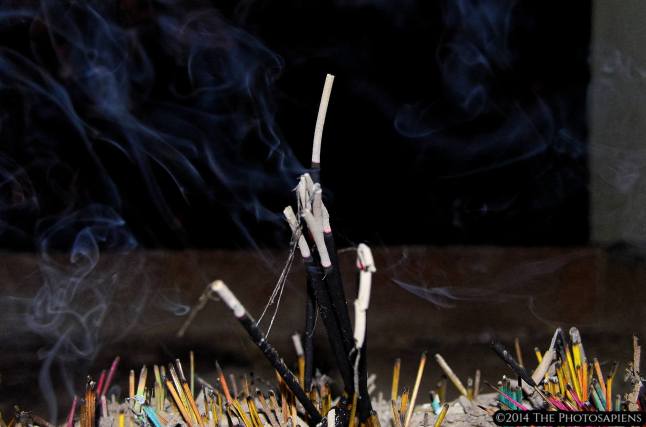
photosapiens agarbatti

Image courtesy of The Photosapiens, click to see more.

The Gates to Common Ground


India is a steaming melting pot of faiths and cultures, one I was briefly cast into as a callow youth. I brought all my first world certainties to that extraordinary, baffling country. I hope I left some of them behind.

My journey started with my ego nicely plumped. An armed guard met me at Delhi airport and deposited me in the bosom of my family in Lucknow. There, amidst those who had remained through partition and the lure of the West, I was loved and coddled. But my movements were bounded by the modest compound, and I lacked all the freedom to roam I knew from London.

Opposite the house there was a temple. While I never went there, it provides the strongest memory of the trip. Every day the temple PA system would squeak to life. Over the braying of streetwalking cows and the intemperate traffic noise, a female voice would rise up in worship. I knew nothing of this lady but the relentlessness of her prayer. Whether she was maiden, or mother, or crone; weathered by care, surrounded by offspring or virgin – I never discovered. Her voice has stayed with me over the decades.

She read a repeated litany of thanksgiving and beseeching. It went on for hours and was almost incomprehensible to me. Time and familiarity had created an elision of words that made them almost impossible to follow. At first it was just annoying. The annoyance bred ridicule: constant use had lined the lady’s throat with gravel, her voice lacked any melody or softness. It was harsh on the ear and grated on the nerves.

By the time I left it was something I waited for. I would sit on the rooftop as the swelling cacophony of suburban life overwhelmed the quiet of morning. And then the alien soundtrack would gather its ponderous momentum. The harsh voice would batter the worldly hubbub into submission, silencing the chatter that filled my head. In those moments, before the inevitable call to join the family for lunch, I found a peculiar peace and freedom. The petty concerns of living evaporated as I fell into the immersion of her worship. The transactions that form life were diminished. I relinquished my hold on them with increasing ease. I was no longer bound by the fading glory of the cracked walls and peeling gate of my uncle’s home. I relearned in that time the joy of writing, and thinking without constraint.

It was only later I recalled that I had felt that stillness and freedom before, in an environment that could not have been more different. It was at choral Evensong. The rooftop in Lucknow was painfully bright in the sunlight, with rowdy, impatient India rising from the street below. In contrast the chapel was dim and quiet. Ancient oak absorbed light and sound. Even my breathing was hushed, as if the enveloping robes for lay visitors laid a geas of monasticism upon me. The service was pretty high up the candle, designed to awe as much as inspire. It was during the Apostles’ Creed that the same sense of stillness claimed me. The possibility of a broader understanding reached out to me, unlocked by absorption and chant.

In itself that moment is not unusual or exclusive, it is often found in music and meditation. Now I am aware of the sensation I have found it in such prosaic circumstances as a long night drive. With the busy, practical part of the mind locked in concentration, the higher functions can be uncoupled and freed. What startled me was to find that outcome across such a broad religious divide.

I found it again most recently, and perhaps most surprisingly on Hajj. During three weeks of pilgrimage the quiet, contemplative moments were plentiful. What astonished me was to be so transported during the rite of Tawaf.

Muslims are required to make the pilgrimage to Mecca once in their lifetime, if their health and financial wherewithal so allow. In past times those in poor far flung villages would save for a lifetime so that one representative could complete the Hajj from among them.

The spiritual function it performs no doubt varies from pilgrim to pilgrim, but some elements are at its core. First and foremost it reinforces the connection of the person to the divine and distances the individual from the concerns they left behind. It also seeks to engender a sense of oneness with all humanity and erase the sense of difference. All male pilgrims wear two simple pieces of unstitched cloth, the ehram. There is no rank and no precedence for wealth. The clothes are deliberately reminiscent of a shroud, the pilgrim will leave reborn.

One of the many acts Muslim pilgrims must undertake is the Tawaf.  They walk seven times around the black draped building in the centre of Mecca – the Kaaba. It is a rite than places God at the centre of creation, and man in his orbit. As one might expect, an endeavour in which several thousand people at a time are involved is stifling and chaotic. It is utterly different to the sedate choreography of Evensong, or the solitary rooftop. Not even the heat is a common factor. In India it was bright, baking direct sunlight; in Mecca it was a strength sapping sauna, fuelled by the skin crawling proximity of sweating bodies.

There is no organisation to it, there is no system. There is no queuing which my Britishness so craves. At any point in time some are beginning their seven circuits, some are in progress and some are finishing. Some people are not there for Tawaf at all, but to touch the building itself, or the holy black stone set in one corner. And there are more people trying to do all this at the same time than the orderly western mind can comprehend. For those familiar with rugby the seven circuits of the Kaaba are like a forty five minute rolling maul. It definitely shares all the rib cracking and toe crushing you would expect from the most violent of gentlemanly pursuits.

In that environment, so far removed from any other experience, and while in constant motion, it seems strange to claim access to the stillness. And yet it was there. The key was in the repetition of prayer, simple words of entreaty and gratitude, over and over. The sensation of elbows and heels and moist collisions faded. I was surrounded, and yet there was a zone of complete calm in which I could orbit. It was a planetary stillness, in which movement was effortless and irresistible and entirely natural. In the very beating heart of Islam I put to use the lessons learned from Hinduism and Christianity.

Somehow in heat and breathless endeavour to put one foot in front of the other, to progress and not impede anyone else, and to pray in fervent helplessness I unlocked the door to which a distant chaplain and dedicated lady had provided the key. In that thronging multitude I found my unique connection to the divine.

And of course we are all built the same way. Our brains are abuzz with inputs and reactions. We respond because therein lies survival and progress. How curious then that the connection sparks into life when that immediacy is constrained.

When we silence the babble of an inquisitive child with a new toy, then the quieter sibling, the one that sees much and says little, can speak up. Only when it is certain of our undivided attention will it share its precocious insights.

All of which left me considering the nature of faith, religion and prayer. In three incomparable religious circumstances I found the secret to freedom from the passage of time, and the constraining awareness of the mundane. The common thread was a method to distance the base concerns of living. Repetition of prayer seemed to be an essential part of the key that unlocked this state.

So what? Have all the world’s faiths merely found the same intellectual opium? Does a morphic resonance underlie the spiritual mind, if there even is such a thing? Do we all crave the same momentary high and nothing more?

I’m wary to claim epiphany. But in those moments of separation and elevation there was a distinct sensation of something more. I sensed a design grander than the primitive needs of food, shelter and procreation. Nor am I willing to categorically state this was a religious experience. These were moments of acknowledgement that the human mind has capability beyond the cunning and avarice of a higher animal. Does it matter if this is an evolutionary trait that promotes adaptation and innovation, or a divinely inspired gift? The fact is that it is there. Whether we ascribe to an external deity or the god within, we are more than the sum of simple biological processes.

More alarming, more heretical still is the realisation that this is no secret at all. Without searching I found the key in plain sight in three different faiths in three different parts of the world. Is it unreasonable to say that faiths of which I have no experience also share it? Or to suggest that other modes of living that do not characterise themselves as faith, or religion, share it too? Look closely and you may find it at the Wailing Wall, in the manic solfège of Sufi singers, or the throbbing intensity of an underground night club.

I wonder how different the world would be if everyone could take that moment to pause, meditate, pray, and touch the sensation of possibility?

I also wonder, as a Muslim, what it might mean for greater interfaith understanding if the restricted precincts of Mecca and Medina could be opened to people of all faiths or none. How would it be if the welcome I have always found in churches and cathedrals could be extended from the holiest sites in Islam?

What if the chaplain that lead evensong could swap his cassock for the rough unstitched ehram, or the chanting lady of Lucknow don a hijab, and join the orbit of chaos and connection? How different would our conversation be when we could say “I have seen what you see, I have been where you have been.”

My instincts say that openness, sharing, the cross contamination of ideas and beliefs is always a good thing. If we look for similarities perhaps we will lose our focus on differences.

If we all share that higher consciousness, the ability to see beyond our own cravings, then perhaps we should share the paths by which we get there.

END


More of my writing here

I should admit that The Photosapiens are all younger cousins of mine, from the Indian branch of the family, and I did not ask their permission to use the photo – I just told them I was doing it. That’s just how scions of multiculturalism roll.

Faith and Continuity

Suleimani Aqeeq Ring

Suleimani Aqeeq Ring

In Islam we differentiate between Muslims (those who submit to the will of Allah) and Momins (those who believe). Believers have attained a higher state of faith than those who submit. One of the five signs of a believer is that they wear a ring on their right hand, typically a carnelian, and this is mine.

My maternal grandmother bought this in Iraq as a gift for my father, her son-in-law. My brother inherited our father’s utterly gorgeous Omega watch, and I got the ring. That’s pretty much all he had, and as all my grandparents were poor as church mice the gift is probably as much as my grandmother could afford.

I also inherited my father’s mannerisms, but alas not his elegant fingers; the ring has been widened twice since I have owned it.

This is my symbol, of the things I believe, who I am and where I came from.

End

More symbols here

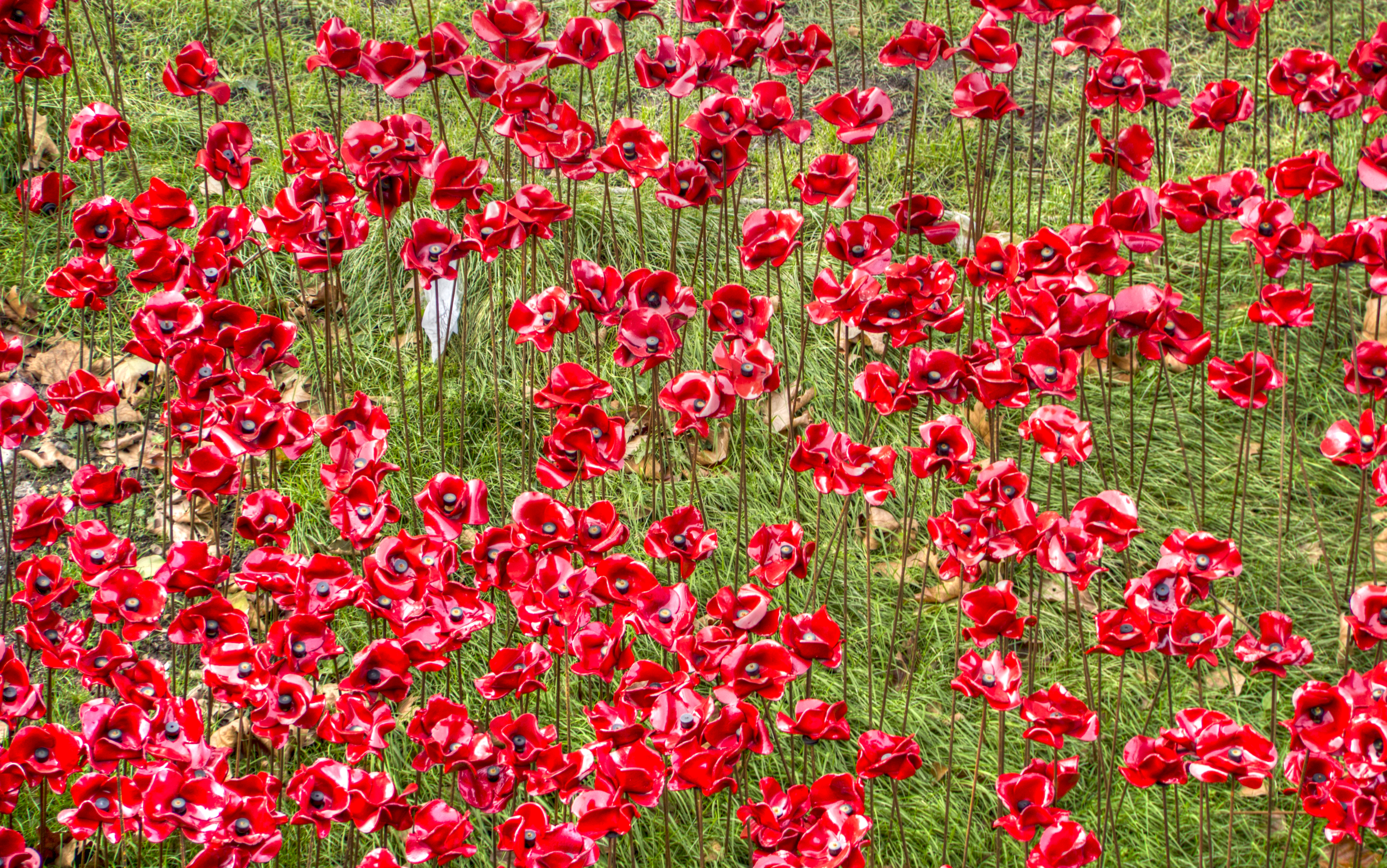
Cross Cultural Living and the Poppy

I was born in London, and apart from university and a year working away, I have lived my whole life there. My parents were born in India, and moved to Pakistan. If you trace my roots back far enough you will find yourself on the eastern shore of the Arabian Peninsula. I am a Muslim, I am a Shia. I wear a poppy on and around Remembrance Day, and it has never been a dilemma.

I have seen the armed forces of this country, my country; go to war against people who share my faith and my ethnicity. And yet every year I wear a badge proclaiming solidarity with those soldiers, sympathy for their suffering, financial support for their welfare, and it has never been a dilemma.

I bought poppies for my kids because I think they should learn to be part of this tradition.

There is a difference between the execution and accountability for public policy. The boys and girls who go to war are not accountable for the policy, they merely execute it, and whether that is hostile action in Helmand or distributing aid in a disaster zone, they are required to follow their orders. The accountability lies with the politicians who choose to send them.

I believe Tony Blair to be a war criminal, and I would support lawful action that sees him brought on charges to The Hague. But that does not criminalise the people he sent to war, nor does it diminish their courage. Nor does recognising that courage diminish the injustice and the suffering of the people of Iraq and Afghanistan.

With a longer historical lens it is worth remembering that soldiers from the subcontinent were present in both the great wars. They fought and died with as much courage and determination as any other race, creed or colour, and yet their actions are rarely remembered or lauded. I wear the poppy in part for them, because it is shameful for them to be forgotten.

So don’t be surprised that there are two badges on my coat, one proclaiming my Shia Muslim faith, and one my wholesale participation in British life, for I am both.

IMG_1323_4_5

DP Perspective – The History Rant (Hajj diary extract)

Today’s prompt was to consider how something that drives you crazy and something that makes you happy may make you change your perspective.

I started with good intentions then wandered off topic a bit. Another snippet from the Hajj diary.

–>

The balance between preserving historical monuments and providing living architecture for modern use divides opinion. The Masjid al Nabawi (Mosque of The Prophet) in Medina is a case in point.

The Saudi approach is firmly in the present, the past is razed as much from an ideological perspective as practicality. Millennia of history and archaeological evidence have been bulldozed and concreted over and then sealed below marble. The result is a beautiful, awe inspiring space that swallows up two million people. And there is the trade-off: allowing the annual movement of so many people and accommodating their ease, comfort and visual pleasure; or retaining a sense of history and connection to the past.

We gain great architecture at the cost of our roots. The practicality is evident in the Masjid al Nabawi itself, and the ideological underpinning in the graveyard beside it. Graves dating back to the very first days of The Prophet in Medina, and perhaps even earlier have been allowed to decay, pre-existing shrines and tombs have been demolished, and there is nothing to identify where the specific graves of key individuals in Islamic history lie.

I’ve travelled much of the world. Every other country I have seen venerates, protects, or at least acknowledges the existence of its forbears and makes some attempt to protect its history. Not so in the holy city of Medina. There the past is an inconvenience and a burden against the needs of the present.

Nowhere is perfect, sometime soon I’ll be blogging about Hutchison Wampoa’s dastardly plans for Deptford, and the consequences for the historic shipyard, but I digress.

Putting aside the loss of history, the experience of the Masjid al Nabawi is exquisite. In the heat of the day huge pillars open up like flowers casting acres of shade. The marble is always cool underfoot, and aside from the very congested areas near the tomb and the pulpit of The Prophet there is always room to find a quiet spot for personal prayer and reflection. That is a remarkable feat.

Of course the trade-off is not so black and white, I was trying to begin with a sense of balance, but that is as lost as the Arabian historical record. Kerbala manages five times as many people and yet is a shrine and a city all at once, and it does this with a fraction of the wealth at the disposal of Saudi Arabia. St Mark’s Square and St Peter’s Square manage large flows of people, and yet retain their deep historical foundations.

It makes you wonder what evidence the past holds that makes them fear it so much.

END

Image

More about my Hajj experiences and about my Hajj book here

If you are interested in more of my writing please check out my book:Image and Other Stories

DP: Confusion / Surreal – Morning Prayer at Mina (Hajj diary extract)

This is an extract from the my Hajj diary, which is finally out with my beta readers. The DP kicked off the recollection of the event below; and it was worth a re-run when the prompt was surreal.

–>

As we packed up in Arafat I felt hollow, the epic high of the afternoon had emptied me. Salvation was an excoriating wrench.

I was also feeling a bit grumpy. Mum wouldn’t let any of the ladies in our group handle the wheelchair, and so I had to ask Sheikh Shomali for permission to stay with the elderly men and the women, and not join the other men on the overnight march to Mina. There were rules permitting this which he showed me in his Hajj rule book. He didn’t pick up on any of my hints that I really didn’t want him to find the appropriate ruling.

So it was that I was packed into the coach like a reluctant schoolboy who has been cut from the sports team and watched my comrades prepare for what I would later learn was an exciting and uplifting experience. In contrast I had one of the most disturbing experiences of my Hajj.

The coach journey gave me a chance to chat to Sheikh Arif, who like all of our organisers and facilitators was a fascinating and unusual character. I’ll not colour your perceptions too far, but I do recommend you take the chance to hear him speak. He’s one of the new generation of clerics that has a natural facility with English, combined with a spiritual and inclusive world view.

We talked about the role of verbal repetition in calming the chatter of the mind, and so allowing the brain to access the functions which have a greater inclination to opening themselves to the divine. When I suggested that our repeated prayers while circumambulating the Kaaba, or while reading the tasbeeh (rosary) were similar to dharmic repitition disciplines he didn’t launch me bodily from the coach for heresy. We got on well after that.

Mum was right as usual. The coach dropped us a couple of kilometres from our camp in Mina and the route was crowded. It would have been a huge imposition on the girls in the group to ask them to weave the recalcitrant wheelchair, dodgy wheels and all, between the milling hordes, up and over kerbs, round what we all hoped was water, and finally down the long, steep stairs that lead to the camp.

More on the wheelchair, which had a personality all its own, later.

We’d been warned about the mosquitoes in Mina. In truth there were fewer than the sun obscuring clouds I had expected, but there were still plenty and they were persistent. It made for a cold and uncomfortable night curled in the two sheets of my ehram, hoping I hadn’t left any holes for the little bloodsuckers to get in.

When the call to prayer sounded from the nearby Masjid al Khayf, I leapt at the excuse to get out of the tent. It was darker than I expected for dawn prayers, although the ubiquitous fluorescent light made it impossible to truly assess time between dusk and dawn.

Praying in Masjid al Khayf is highly recommended, so I was surprised none of the older men wanted to go as well, but I chalked it up to age and the demands of the last few days. I skipped off to wash, and feeling righteous made my way to join what I expected to be a long queue of pilgrims lining up to pray.

There was a single armed guard on duty, and only a few other ghostly souls wandering about. The guard watched me curiously as I navigated the unnecessarily perilous steps. No one else seemed to be coming in, all the stalls outside were closed, my holy buzz began to evaporate.

It looked like a morgue. Across the acres of floor space were littered bodies in shrouds. Anonymous and still. It was the aftermath of a natural disaster, an act of God. As I picked my way between the carelessly strewn shapes, a few faces peered out between the folds of cloth. To a man they were heavily bearded, most had the ruddy strong featured faces of the Pashtun.

I made two startling realisations at once. Those who were here without the benefit of a well organised caravan from a wealthy nation had to stay somewhere, and the masjid was at least marginally warmer and more comfortable than the asphalt outside. The other was that it was not time for Fajr at all, the dawn prayer was hours off, I’d woken to the call to the optional non communal night prayer.

The holy buzz had not drained out completely, so I figured some prayer and contemplation amongst my fellow pilgrims would be better than returning to the tent.

Thus began an unnerving couple of hours. I chose a quiet spot away from where people would need to pass by expecting to immerse myself in my books until the actual prayer time. The first few minutes were OK, but then things started to get weird.

I ignored the first couple of people to pass by unnecessarily close, thinking they may have friends on that side of the vast prayer hall. It was after the next few that I noticed a pattern. Everyone coming down the stairs to the main level would swerve hard left, and walk one pillar width away from the wall towards me. I was seated between the wall and the first row of pillars, but quite a long way from where the eventual front rank of prayer would be.

At each pillar was a small bookshelf with copies of the Qur’an. Everyone stopped at the bookshelf nearest me, picked up exactly the same copy of the Qur’an from the several on the shelf, flicked a couple of pages, looked at me, and then went on their way. Everyone. At first I dismissed it as an odd ritual, and I had by chance chosen the particular “pillar of blessing” to sit by. Then a more alarming thought intruded.

After what had happened in Medina we were all dialled into the sectarian divisions between ourselves and our Saudi hosts. Even in the supposed anonymity of ehram you can get a pretty fair idea of someone’s religious outlook, if not their precise sect, nation of origin, and choice of full English or continental breakfast.

The faces stopping by me all had the moustache-less scraggily unwholesome beard of every Al Qaeda wannabe the media have spent the years since 9\11 demonizing. I cursed and berated myself for falling into the trap of prejudice and tried to concentrate on my prayer. But the procession continued and the stares grew longer and more pointed, the flicks through the pages of the Qur’an more cursory. And it was everyone.

I have spent a very tedious part of my life as a statistician, I know a valid sample and a level of correlation when it stares at me from a heavily bearded face. Everyone came down off the stairs, paused, turned left, walked between the pillars to the one near me, picked up a Qur’an, flicked through the pages without reading them, looked at me then went on their way.

I checked my ehram over and over, costume malfunction is very possible when you are wrapped in two pieces of cloth, but everything was modestly covered.

I could think of no other reason for it than some latent hostility. It may have been some essence of westerner that clung to me, or my very obviously newly grown beard. Somehow in the middle of the unifying event for all Muslims there was a palpable sense of difference. I had not felt it anywhere else, but here I was the other and alone.

I wasn’t going to move. I sat through their distaste, their distrust, until the Fajr call to prayer. Even then my unease continued. Around me everyone crossed their arms to pray, my arms were open. They were content to rest their heads in supplication on the man made carpet, I put mine on a rough piece of clay. I was utterly alone, but I was not going to move.

It didn’t help that I had still not mastered the art of managing the top half of my ehram, or the bag which held my shoes. The cloth slipped from one shoulder, was tugged back only to slip off the other. I balled some of it in my fist to stop it flapping around. In the meantime whenever I went from sitting to prostrating myself my bag would slide forward on my back and my shoes would whack me on the back of the head.

Far from being the brave and dignified in the midst of hard eyes and cold hearts I was reducing the solemnity of prayer to slapstick. Each time my shoes hit me I imagined it was Allah, slapping me on the back of the head, shaking his own head in disbelief and saying with a resigned sigh, “You Muppet.”*

For what it was worth I finished my prayers, although I may not have attained the proximity to the divine the experience was supposed to achieve. I had some bumps on the back of my head though.

In the lifelong game of Kerplunk that is the quest for wisdom the penny dropped a couple of levels for me a while later. All the hale and hearty pilgrims were still walking to Mina. I was unusual: a young man in pilgrim garb but miles away from where he should be. It didn’t explain it all, but it held up a mirror to my own fear and prejudice. My spiritual growth still had a long way to go.

END

More about my Hajj experiences and about my Hajj book here


If you are interested in more of my writing please check out my book: Image and Other Stories

* I am aware of God being incorporeal, omniscient and omnipresent, however in my head the following moment of beauty from Kazantzakis is as good a description of God as I have ever read:

“I’m not joking boss. I think of God as being exactly like me. Only bigger, stronger, crazier. And immortal too, into the bargain. He’s sitting on a pile of soft sheep-skins, and his hut’s in the sky. It isn’t made out of old petrol-cans, like ours is, but clouds. In his right hand he is holding not a knife or a pair of scales – those damned instruments are meant for butchers and grocers – no, he’s holding a large sponge full of water, like a rain cloud. On his right is Paradise, on his left Hell. Here comes a soul; poor little thing’s quite naked because it’s lost its cloak – it’s body I mean – and it’s shivering. God looks at it, laughing up his sleeve, but he plays the bogy man: “Come here,” he roars, “come here you miserable wretch!”

“And he begins his questioning. The naked soul throws itself at God’s feet. “Mercy,” it cries. “I have sinned.” And away it goes reciting it’s sins. It recites a whole rigmarole and there’s no end to it. God thinks this is too much of a good thing. He yawns. “For heaven’s sake stop!” he shouts. “I’ve heard enough of all that!” Flap! Slap! A wipe of the sponge, and he washes out all the sins. “Away with you, clear out, run off to Paradise!” he says to the soul. “Peterkin, let this poor creature in, too!”

“Because God, you know, is a great lord, and that’s what being a lord is all about: to forgive!”

from Zorba the Greek by Nikos Kazantzakis